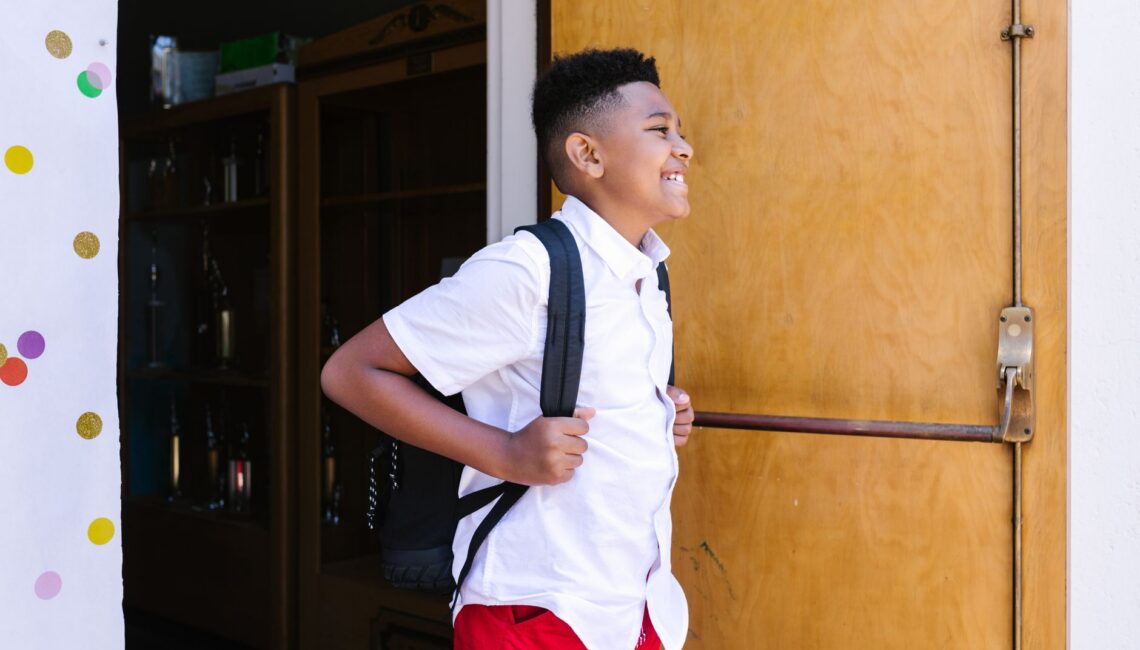
He got out before I fully stopped the car.
That was the first punch. Not dramatic. Not movie-scene dramatic. Just a door opening, backpack swinging onto one shoulder, new shoes hitting the curb, and my eleven-year-old already scanning the sidewalk for people he knew. The first day of school drop-off used to involve straps and buckles and a stuffed animal wedged under one arm. Now it was a quick glance back through the open door, one hand lifted halfway, and a look that said, I love you, but please do not make this weird.
So I did not make it weird.
I wanted to, obviously. I wanted to say something that landed. Something with weight. Something he would carry in his pocket all day next to the school-issued Chromebook and whatever crushed snack was already dying in the bottom of his backpack. Be kind. Work hard. Remember who you are. All the dad-coach phrases were lined up in my head, stretching, ready to run onto the field.
Instead I said, Have a good day, bud.
Elite stuff. Hall of Fame material. Somebody put that on a plaque.
He nodded, shut the door, and joined the stream of kids moving toward the building like they all had somewhere better to be than standing beside a minivan with their sentimental fathers. He looked older from behind. That was the part I was not ready for. The backpack was bigger, sure. The stride was different too. Less bounce. More direction. Not grown, not even close, but no longer little in the way my brain still tries to keep him.
I watched him disappear into the crowd, and for one strange second I could see five versions of him at once. The preschooler with a lunchbox almost as big as his torso. The kindergartner who cried once, then decided school was his kingdom. The second grader missing both front teeth. The third grader masked up and confused by rules adults barely understood. And now this version, shoulders a little broader, hair intentionally messy, pretending not to care while caring deeply about everything.
Then the car behind me gave the tiniest polite tap of the horn, which is society’s way of saying, Wrap up your feelings, buddy, other people have calendars.
So I drove away.
An hour later I was halfway through a workout I had been telling myself would clear my head. It did not clear anything. It just gave my thoughts a soundtrack of clanking plates and bad gym music.
I was on the rower, pulling hard enough to make it look like I had a plan. Former athlete muscle memory is funny that way. Give me a timer, a distance, a rep count, and I can still pretend I am in control. I can still find that old gear where pain becomes information and sweat becomes proof. Ten minutes in, my lungs started to burn, my legs started to complain, and my mind wandered right back to the curb.
He got out before I fully stopped the car.
Pull. Breathe. Pull. Breathe.
I used to be the kind of guy who measured progress in numbers. Times. Scores. Weights. Wins. If something mattered, there was a way to track it. If you worked harder than the other guy, stayed later, lifted more, ran faster, you could create separation. That logic built a lot in me. Discipline. Confidence. A slightly unhealthy relationship with losing to someone in a meaningless pickup game. But it also gave me the illusion that everything important could be trained into submission.
Fatherhood does not care about your training plan.
It lets you feel like a veteran one minute and a substitute teacher with no lesson plan the next. You can pack the lunch, sign the form, remember the water bottle, say the calm thing instead of the sharp thing, get everyone out the door on time, and still end up staring at your kid’s back in a school drop-off line wondering when the hell he got so tall.
I kept rowing.
There is a particular sadness to the first day of school that is not exactly grief. Grief is too heavy a word for a kid walking into a building where he will see his friends, learn fractions or ecosystems or whatever fresh academic torture is scheduled for tweens, and come home hungry enough to eat like a raccoon in a pantry. He is fine. More than fine. He is doing what kids are supposed to do.
That is the problem, I guess.
They are supposed to grow. They are supposed to need you less in the visible ways. They are supposed to stop reaching for your hand in public and start negotiating screen time like a corporate attorney. They are supposed to test sarcasm on you, discover deodorant, develop opinions about shoes, and act like your music is a personal attack.
And still, there is a quiet ache in watching the job change.
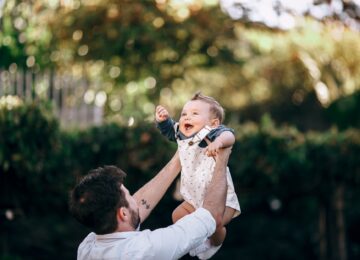
When he was little, the work was physical and obvious. Carry him. Feed him. Buckle him. Catch him before he launched himself off furniture with the confidence of a drunk stuntman. You were always needed, constantly summoned, rarely clean. Exhausting, yes, but clear. Nobody had to wonder where Dad fit in when Dad was the one holding the extra socks, the emergency wipes, and the limp sleeping body after a long day.
Now the work is more subtle. You are needed in ways that are harder to prove. A ride. A glance. A question asked at the right time and then the discipline to shut up long enough for the answer to arrive. You become emotional scaffolding, and if you do it well, they may not even notice it is there.
That is a tough assignment for a guy raised on effort being visible.
My own first days of school came back to me in pieces while I moved from the rower to the squat rack. The smell of sharpened pencils. The stiff feeling of new jeans. My dad’s voice in the morning, steady and practical. My mom fussing with something I thought did not matter but probably did. I do not remember every drop-off. I do not remember every word said to me at the door.
But I remember the feeling of people making sure I was launched.
That word sat with me under the bar.
Launched.
Not pushed away. Not abandoned into the wild. Launched. There is force in it, but there is also faith. You do your part, then you release. You hope the angle is right. You hope the wind is kind. You hope all those small, repetitive, mostly unglamorous acts added up to something sturdy inside them.
I unracked the weight and immediately thought, This is heavier than I meant it to be, which also felt like a pretty accurate caption for parenting a tween.
He is in that in-between stage where he still laughs at dumb noises but also carries real embarrassment now. He can explain a video game economy in painful detail but sometimes forgets socks. He wants independence until independence requires finding the thing that is directly in front of his face. He is sharp and tender, hilarious and moody, brave and occasionally helpless in ways that make me want to laugh and kneel down beside him at the same time.
And me? I am trying to adjust without making my adjustment his burden.
That might be the hardest part. Not grabbing for the old version of him because it made me feel useful. Not turning every transition into a ceremony just because I am aware time is moving. Not forcing profundity into the morning when what he needs is a normal dad who does not yell out I love you, my sweet baby angel in front of the entire sixth grade.
The bar went down. The bar came up. My knees made a sound I chose to ignore.
There are sacrifices nobody claps for in this season. Not the heroic kind. Just the quiet trade-offs. Workouts squeezed between drop-offs and meetings. Ambitions carried carefully so they do not spill all over dinner. Emails answered late because the car ride mattered more. Letting a career thought wait because a kid started talking, and every father of a tween knows that when they start talking, you do not interrupt the broadcast. You listen. Even if it begins with a meme you do not understand and somehow ends with a real fear about a new teacher.
I used to think presence meant being there for the big moments. Games. Concerts. Birthdays. Firsts. Those still matter. But the older he gets, the more I realize presence is often hiding in the throwaway minutes. The drive. The doorway. The kitchen counter. The pause before he leaves the car.
That morning, I almost filled the pause because I was sad and wanted relief from it. I wanted to mark the moment so I could feel like I had honored it properly. But maybe the small win was letting it be his morning instead of my memory project.
Look at that. Personal growth, performed quietly in a drop-off lane while wearing gym shorts and holding back a monologue. Nobody gave me a medal. Rude, honestly.
By the end of the workout, I was sweaty, tired, and only slightly less sentimental. My body felt worked over in a familiar way, the kind of soreness I understand. The other ache stayed looser, harder to locate. Somewhere between pride and loss. Somewhere between watching him walk away and knowing that walking away is the whole point.
I checked my phone even though I knew there would not be a message. Of course there was not. He was at school, living a life that is increasingly his own. That is good. That is healthy. That is exactly what we are building toward.
Still, I stared at the blank screen for a second longer than necessary.
Then I put the phone down, wiped off the bench, and started another set.