“No, not that foot.”
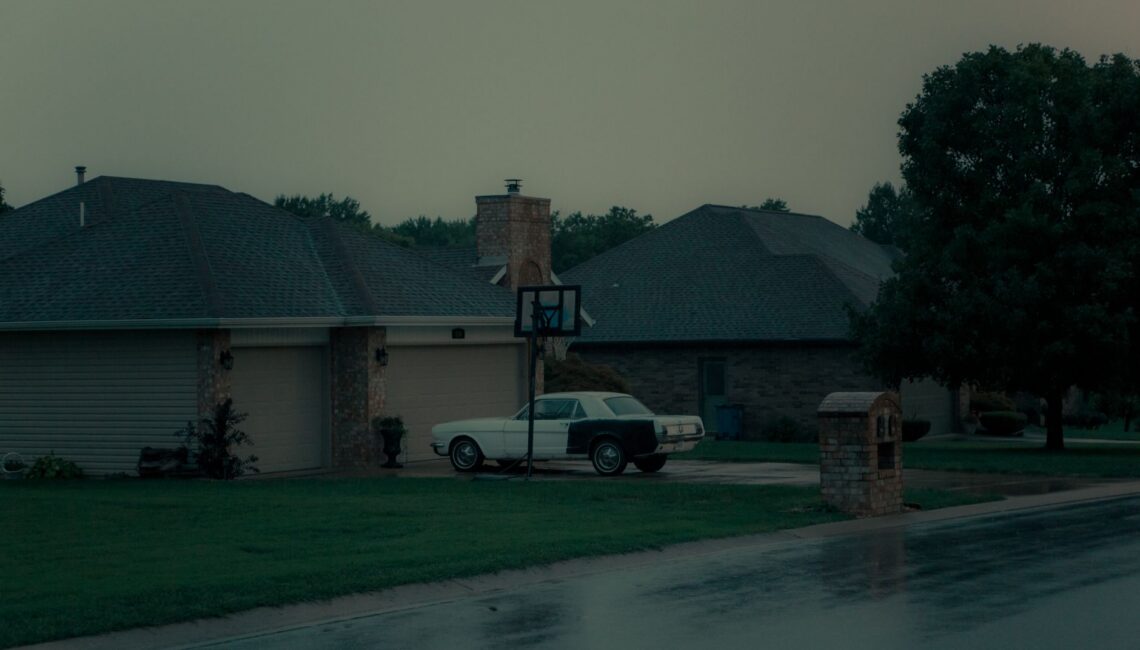
I heard my own voice hit the driveway and bounce back at me, sharper than the basketball did. My daughter stood at the top of the key, eleven years old, hoodie sleeves pulled over her hands, cheeks pink from the cold, trying to learn a jab step because I had somehow convinced both of us this would be a fun ten minutes before dinner.
It had started innocent enough. She had a game coming up. She wanted to get better at creating space. I wanted to help. That sentence right there should come with hazard lights. I wanted to help, but the old competitor in me showed up with a whistle around his neck and a bad attitude. Within five minutes, I had turned a driveway into a practice facility and a kid asking for attention into an athlete receiving corrections.
“You’re stepping across your body,” I said.
She rolled her eyes. Not dramatically. Not disrespectfully. Just enough to let me know I had crossed some invisible tween border where fathers become background noise with shoes.
“I know,” she said.
“If you know, then fix it.”
There it was. The line. The one I wish I could grab out of the air and stuff back into my mouth. Not because it was the cruelest thing ever said by a parent, but because it carried that tone. That irritated, impatient, why-aren’t-you-getting-this tone. The tone of a guy who forgot he was talking to his daughter and not barking at a teammate during a bad drill.
Now I’m sitting in an orthodontist waiting room, three days later, staring at a fish tank with no fish in it, replaying the whole thing while she’s in the back getting some wire adjusted. There’s a mom across from me filling out insurance forms, a little kid on an iPad with the volume barely low enough to keep civilization intact, and me, a grown man in work pants, quietly getting humbled by a memory of a left foot.
Waiting rooms are weird like that. You think you’re just killing time, but time starts killing you back. There’s nowhere to perform. Nowhere to clean. No email you can answer with enough urgency to outrun yourself. Just vinyl chairs, fluorescent lights, and the version of you that acted like an ass in the driveway.
I keep seeing her face after I said it. She didn’t cry. That almost made it worse. Little kids cry and you know you broke something in the moment. Tweens have this new skill where they just close a door inside themselves. She looked down, dribbled twice, and said, “Never mind.”
Never mind is a small phrase with a lot of weight.
I tried to recover, of course. Dads are incredible at trying to throw a tarp over the thing we just knocked down. “Hey, come on. I’m just trying to help.” Classic. The official slogan of men who have made help feel like a punishment.
She took one more shot, missed short, and walked inside.
I stood there holding the ball like an idiot.
The irritating part, if I’m being honest, is that she had been doing it wrong. That’s the ugly little truth my ego wants entered into evidence. Her footwork was off. Her shoulders were opening too early. She was losing her balance. If she actually wants to get better, those things matter. Fundamentals matter. Details matter. Repetition matters. I believe that with my whole chest.
But there’s another truth sitting right next to it in this ugly plastic chair: I cared more about being right than being useful.
That one stings.
I grew up in a world where correction meant love, or at least that’s how I learned to translate it. Coaches yelled because they saw potential. Dads pointed out what you missed because they wanted you prepared. You didn’t get a parade for trying; you got told to do it again, lower, quicker, cleaner. And part of me is grateful for that. Discipline built things in me that softness alone probably couldn’t have. I learned how to push. I learned how to lose and come back. I learned that effort is a language you speak even when nobody claps.
But I also learned to hear disappointment in every instruction.
So now here I am, trying to raise a kid who is not me, in a world that is not the one I grew up in, with a nervous system that still thinks every driveway drill is a tryout. She asks me to help, and some dusty part of my brain starts lacing up like there’s a scout in the bushes.
That’s the part of fatherhood nobody warns you about. You don’t just parent the child in front of you. You parent while dragging around every coach, every locker room, every car ride home after a bad game, every time you were told you were better than that. Sometimes those old voices sneak into your mouth before you even realize they’ve been invited.
The receptionist calls another name. Not ours. The little iPad kid laughs at something only children and algorithms understand. I check my phone for no reason. My daughter’s last text is from this morning: “Can you bring my black sweatshirt after school?” No punctuation. No emoji. Tween poetry.
I miss when repair was simpler. When she was four and I could fix almost anything with a snack, a silly voice, or letting her press the elevator button. Now she has a whole interior life I only get partial access to. She has group chats and opinions and music she thinks I won’t understand. She can spot fake enthusiasm from thirty feet away. She can also still fall asleep in the car with her mouth open after insisting she isn’t tired.
That’s the age she’s in. Half little kid, half teenager loading software updates overnight. One minute she wants me to watch the shot she just made. The next minute my cheering embarrasses her so deeply you’d think I announced her baby nickname over a stadium speaker.
And me? I’m still learning when to coach and when to just rebound.
That sounds cleaner than it feels. In reality, I am constantly late to the adjustment. I say one sentence too many. I correct after the moment has passed. I mistake her silence for attitude when it might just be overload. I get irritated because I carved out time, because dinner is getting cold, because I know how much faster she could improve if she would just listen.
There’s that word again. Just.
Just listen. Just focus. Just fix it.
As if growing up is a series of simple switches. As if I, a man who still struggles to calmly assemble furniture with directions written for a monk, have earned the right to be shocked when an eleven-year-old doesn’t immediately absorb biomechanical feedback after school.
The nurse opens the door and calls her name to the front. She walks out with that orthodontist look, lips slightly weird, hand touching her cheek, hair falling out of her ponytail. She sees me and does the smallest smile. Not a forgiveness smile. Not a cinematic father-daughter breakthrough. Just recognition. Dad’s here. Ride secured. Life continues.
On the way to the car, I ask how it went.
“Fine,” she says.
“Sore?”
“A little.”
We get in. I start the engine. For a second, I consider making some big speech about the driveway. The kind of speech that would make me feel mature and emotionally fluent and maybe a little proud of myself. But I can feel her beside me, tired from school, mouth uncomfortable, probably already thinking about homework or a friend or whatever drama lives inside a sixth-grade hallway.
So I keep it smaller.
“Hey,” I say, backing out of the parking spot. “I was too sharp the other night when we were shooting around.”
She looks out the window. “Yeah.”
Not angry. Just accurate.
“I’m sorry.”
She nods.
We drive past the pharmacy, the bank, the same fast-food place that has somehow survived every economic cycle of my adult life. I want to say more. I want to explain that I love her. That I see how tough she is. That my frustration wasn’t really about her. That sometimes my old wiring shorts out and she catches the sparks. But maybe those are words for another time. Or maybe they’re words I need to prove slowly, one driveway at a time.
At a red light, she says, “Can we still practice before the game?”
I glance over. She’s looking at her phone, pretending the question is casual.
And there it is. Not a trophy. Not a lesson. Not some grand redemption arc. Just another chance I probably don’t deserve and absolutely don’t want to waste.
“Yeah,” I say. “If you want.”
“But don’t be intense.”
I laugh, because she is right and because getting scouted by your own child is a humbling experience.
“Fair,” I say. “I’ll try to be normal.”
She gives me a look that suggests normal may be an ambitious target.
Later, I’ll stand in the driveway again with the ball under my arm, trying to remember that not every correction needs to leave a mark. I’ll still see the footwork. I’ll still want to fix it. The competitor in me isn’t dead, and honestly, I don’t want him dead. He built some good things. He just doesn’t get to run every practice anymore.
Some nights fatherhood feels like having the clipboard and the whistle. Other nights it feels like sitting in a waiting room, realizing the person who needed the adjustment wasn’t the kid with braces.