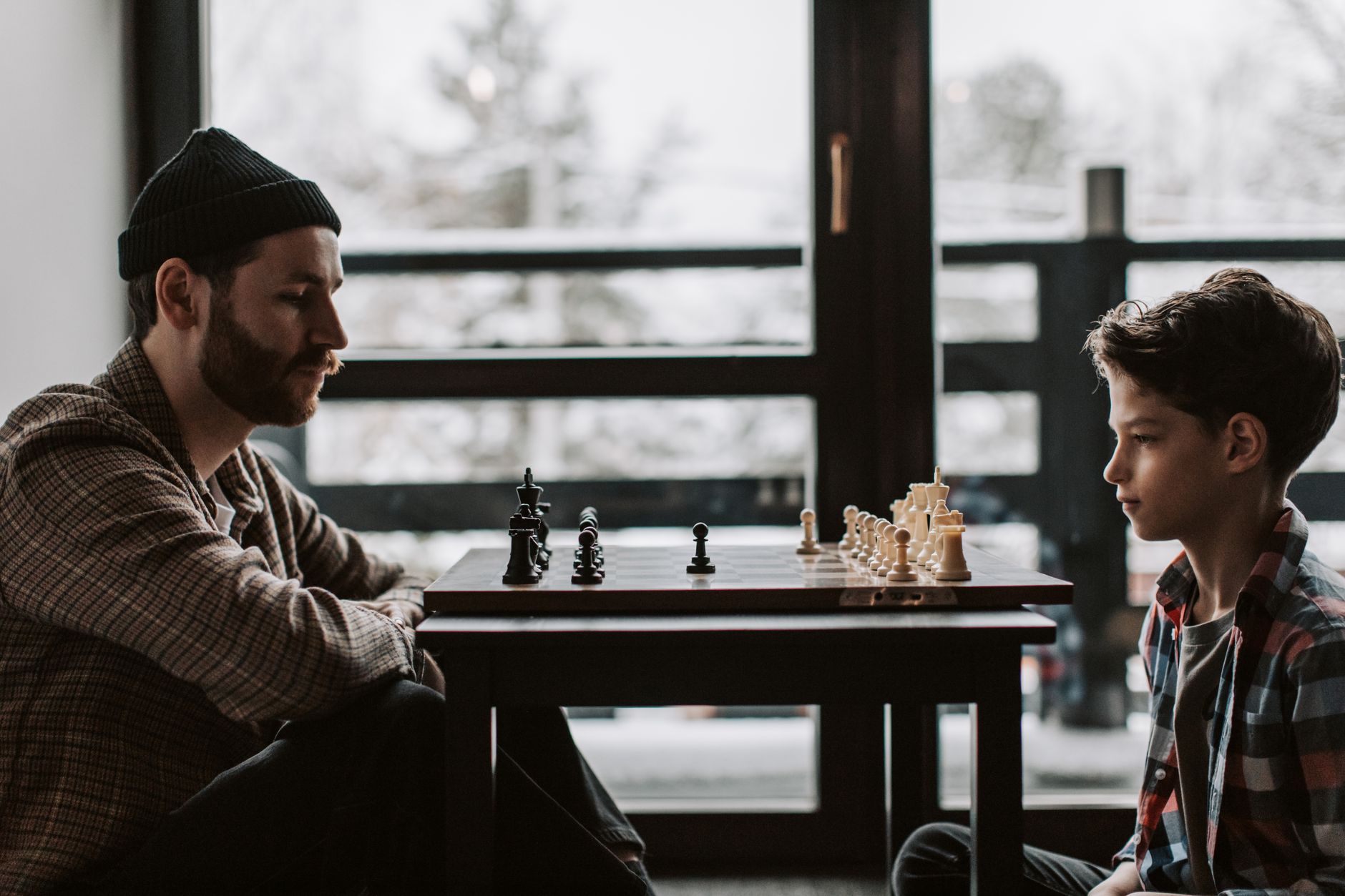
We sat in the fading light of the living room, a hastily abandoned game of chess sprawled across the coffee table. My son’s small fingers hovered over a pawn, indecision wrapping around him like the blankets we had piled on the couch for an impromptu family movie night. Outside, dusk painted the world in soft blues and grays, but inside, the air hummed with palpable tension—the kind that sits heavy between a father and son, both wanting to connect but unsure how.
He looked up at me, a flicker of defiance in his eyes. “You’re just going to win anyway,” he said, his voice an odd mix of challenge and resignation. I watched him, my heart doing that familiar dance of pride and guilt. Here was this tiny human, just a few years away from the teenage bravado of eye rolls and sighs, showing the first signs of understanding competition—the almost instinctual urge to shy away from the possibility of failure. It reminded me of myself at his age, sitting across the table from my own father, feeling that same mix of excitement and dread. I can’t remember if I won, but I can recall that tension; we both wanted to win, but more than that, I wanted my father’s approval.
“It’s just a game, buddy,” I said, but the words felt hollow even as I spoke them. I had told him that countless times before, a mantra I used to justify my own ambition as I pushed him towards excellence. I was caught in this awkward flux between wanting him to enjoy the game and wanting him to fight through the struggle of losing. How could I explain that learning comes from the losses just as much as from the victories? How to strip away the ego that told me winning was what mattered when all I really wanted was to be his dad and not just a competitor?
He finally moved the pawn, and I could see the wheels turning in his mind. He wasn’t just playing chess; he was navigating a world that felt bigger than him, and here I was, a guiding hand who also felt lost. I wondered, in that electric silence, if my ambition for him was too great. Was I pushing him too hard or merely helping him realize his potential? The line between support and pressure felt as thin as the chess pieces we played with, all of them precariously balanced.
As I pondered, I couldn’t help but feel how time was slipping through my fingers—this fleeting moment we shared, poised between a game of strategy and a lesson about life. Would he grow up to resent me for my ambition, or would he appreciate the challenge? Could the same fierce pride I felt in him also be what pushed him away? The contradictions swirled around us, echoing back and forth in the dimly lit room.
“It’s okay to lose, you know,” I offered, an attempt to punctuate my own growing discomfort. He frowned, his lips pursed together, and I could see the shadows of the adult he would become already forming beneath the innocence of his current self. I wanted to scoop him up and tell him he was perfect just as he was, but the truth of it was, I knew life wouldn’t hold back its lessons, and I couldn’t shield him from everything. What did I want him to learn at this moment? How to win gracefully? Or how to know that losing wasn’t the end? It was a complicated dance, navigating these territories where pride and vulnerability collided.
He moved a piece with purpose, and I couldn’t help but smile. In that simple gesture, I saw the spark of determination that lit up so many late nights of practice, the hours we spent sparring and refining his technique. But there was also a glimmer of something else—fear. Fear of failure. Fear of not measuring up to some invisible standard. In that moment, I recognized my own fear reflected back at me, the anxiety of wanting to be a perfect father while knowing all too well that perfection was an illusion.
“Let’s just enjoy the game,” I said again, my voice softer this time. But the truth lingered unspoken, hanging in the air like a ghost. Enjoyment was one thing when you weren’t worried about expectations and outside judgments, but how do you help a child understand that? How do you let them in on the secret that life can be both beautiful and messy all at once? Could my own desire to protect him from pain inadvertently set him up for disappointment? It’s an ironic trap, this fatherhood journey, where you want to give everything but sometimes inadvertently teach the very thing you wish to avoid.
In the flickering lamp light, as he made his next move, I felt the weight of the moment settle over us. The game was unfinished, like so many of our conversations. Here we were, caught in a delicate balance of joy and sorrow, the way fatherhood often is—a beautiful dance of connection and uncertainty, where the hope of finding understanding sometimes slips just out of reach. I realized then that maybe this moment didn’t need resolution. Perhaps it was enough to sit in the tension and let it linger, just as the light in the room waned. We’d finish the game another time, and with it, maybe, we’d piece together the complexities of winning and losing, love and ambition, fatherhood and understanding.