We sang to him in a kitchen that smelled like burnt sugar and pizza boxes. He sat on a stool that was too tall, knees swinging, forehead sticky with frosting, eyes the exact shade of the green candle I’d picked because he’d said green was his favorite last month and then changed his mind. When he leaned forward to blow, the whole room inhaled with him—friends, a couple of neighbors, his little sister who still insists birthdays are for squealing—and his cheeks sucked in that way that makes you want to take a picture you know you’ll forget to print.
He puffed, then paused, like he was checking his trajectory. It took three tries. The last one went: a small, determined gust that scattered the frosting and knocked the taller candle at an angle instead of out. He laughed—this weird, half-victory laugh—and that laugh felt like a headline to the day. Later he would tell me he’d wished for a dog, and I told him I wished for the same thing without telling him that I did not at all intend to be the one walking it at 6 a.m. for the next decade.
I am telling you this now from the middle of an incline run, phone tucked into the treadmill clip, heart rate climbing for the third interval. Mid-sprint the kitchen replays in my head like a highlight reel on a loop. That must be what intervals are for: you push so hard you have to come back down, and when you do, life floods in and every small memory looks bigger than it felt in the moment.
There’s a rhythm to parenting that maps weirdly well to training. Warm up, show up, give everything for thirty minutes, breathe, repeat. You try to hit PRs—be a better partner, a better provider, a better father—and most of the time your progress isn’t linear. Sometimes your kid blows out the candle in two breaths and you feel like you’re winning. Sometimes you try to throw a perfect backyard game and he shows you up, sprinting past you like you’re standing still. That night after the cake, I realized I had a photo of him mid-blow where he looks as if he might float away. It made my chest ache in a way I couldn’t name while I wiped frosting off my chin.
There’s a small sadness that sits next to the pride on nights like that. It’s not the tragic, cinematic sadness; it’s quieter and stranger—like noticing a callus you didn’t realize you’d grown. He’s seven now. Seven feels like the place where the small certainties of early childhood start to thin. He evaluates jokes differently. He notices the way I replace my own water bottle more than he notices the way I tuck his blanket in at night. He’s starting to practice the math of his own life: which friends sit in which seats, who laughed the loudest at his knock-knock joke, how far he can swing without touching the ground.
During a set I think about the first time I changed him after he’d peed on me at two in the morning and how furious and tender I felt in equal measure. I think about the number of parties I’ve hosted, the number of times I’ve asked a parent to boil more hot dogs. I think about the nights I promised myself I’d be at every game and the mornings I snoozed until the last possible second. There’s a ledger in my head that balances time and presence, and the numbers always feel like they should add up differently.
I am competitive by default. I like measurable progress: times, weights, reps, stats. Fatherhood refuses to be reduced to a spreadsheet. It will not let you track development the way you track a season. There are no clear wins—just tiny, unlisted victories, like catching him before he falls off the couch during a ridiculous dare or noticing the way he looks at the moon. Sometimes I catch myself wanting a medal for the easy things: organizing a party, remembering the sparkler, getting the frosting exactly right. Then he buries his face in my shoulder after everyone leaves, the house suddenly echoing, and the medal loses its shine.
I don’t mind that the sadness is there. It keeps me honest. It’s the emotional equivalent of DOMS—the soreness that follows a workout, a reminder you pushed something and it mattered. When I run and my calves protest, I know I forced them to adapt. When I feel that quiet, pulling ache at the edges of a birthday, I know I loved something into changing. That ache teaches urgency without panic. It says: pay attention now, even if you can’t stop the calendar from turning pages.
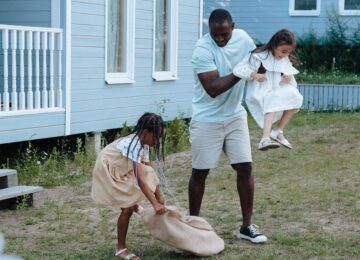
There are ego hits, too. At the party I tried to win the three-legged race with him, because old habits die in tiny stadiums where your kid is the crowd. He zipped away, pulled by a kid half his size who had clearly been practicing, and I fell on my ass in the grass with my pride bruised and my knee scraped. He grabbed my hand, helped me up like it was all part of the choreography, and went back to racing. That’s humiliating and humbling in the best possible way. You want to be the hero in their story and they keep insisting on writing their own chapters.
During the cool down I slow my pace and let the treadmill belt lull me into thinking. I remember my father at comparable ages, at games where I demanded to be seen as a player and not a kid, and how unremarkable his attendance felt at the time. Now I see the weight of his quiet presence—the way it scaffolded my ambitions without asking for a spotlight. I try to be that scaffolding with less mystery and more intention. I fail sometimes. I succeed sometimes. Both outcomes leave fingerprints.
There is a selfish side to this mourning: I miss the version of him who would still let me build him a fort that covered the couch entirely, who thought my bad jokes were the pinnacle of humor, who would fall asleep maybe too quickly at the end of a story. But there’s also a gift in the newness—his small conspiracies about middle-grade school crushes, the way he explains how he beat a level on a game like it was an athletic achievement. He is becoming a person who will one day look back and remember these nights, these sticky candles, these flawed parties. I hope he remembers the way we fought over who got to hold the camera, not the times I had to miss a recital for a work trip.
My last interval ends. I step off, towel around my neck, breathing hard, heart still in that heightened place where everything looks more important. I scroll through the photo of him with frosting on his lip and send it to my wife with a one-word caption: still. It’s an inadequate word for a complex feeling, but it’s the one that lands—still here, still him, still moving away from that smallness we both once lived in. I stretch, fold my hands, and for a heartbeat I keep looking at that picture, at the crooked candle, at the laugh that held everyone together.
I don’t know how to slow the clock. I only know how to keep showing up for the sets, to be present in the stubbornly unmeasurable ways that matter the most. Maybe that’s enough. Maybe it’s the only training plan that works.