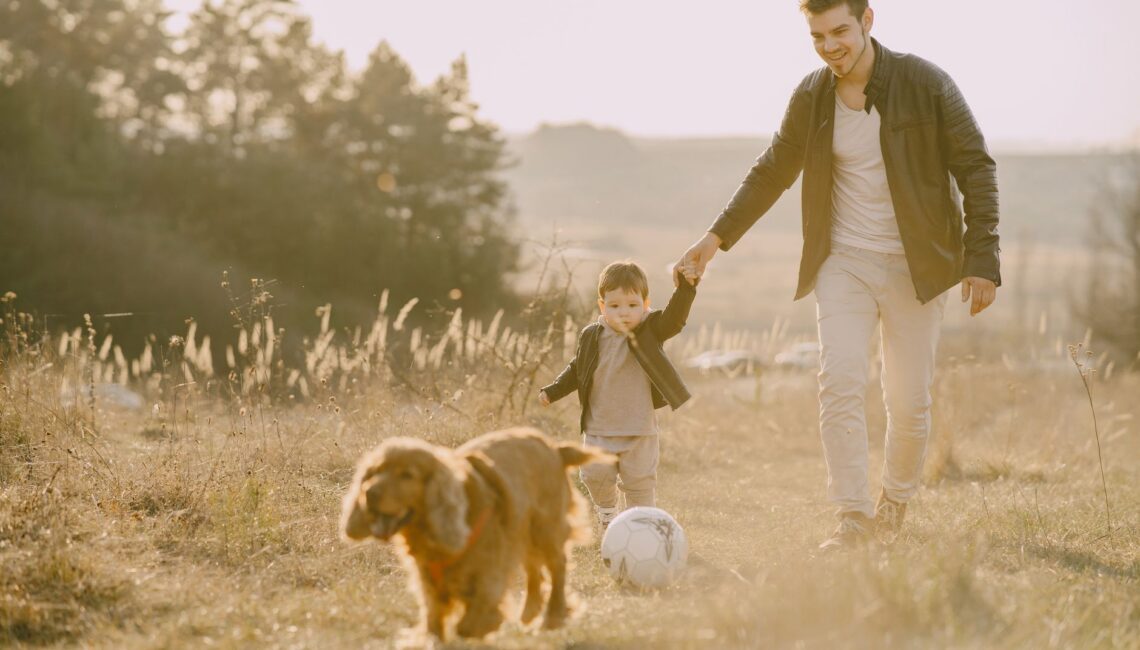
The walk isn’t glamorous work, but you take the repetitions anyway. The dog tugs on the leash on the same quiet street, the morning sun slicing through the oaks, and I count the blips of the clock on my wrist like a drill sergeant counting reps. We march the loop, me and the dog, until the curb coughs up something odd—a photo, nearly swallowed by a clump of dead leaves.
I kneel, the dog noses around, and I peel it free. The print is thin and sun bleached; my eight-year-old son is in a school photo wearing a cape drawn with marker across a solid blue shirt. The back is scrawled with a childish message in a shaky hand, a note that still sounds like it could be whispered from the future: keep playing, keep dreaming. The picture isn’t flawless, but it is a map, a small time capsule of a kid who believed he could defy gravity.
Staring at the image, the walk loses its dull thrum. I remember being that kid, the one who believed the world paused for a cheer, who trained in the driveway even when the streetlights earned their turn. My body still remembers that early discipline—the way a sprint makes the air taste like something you can own, the way a win can feel like proof that the hours you spare from dinners and sleep are not wasted. The boy in the photo is not me; he is my child. But his certainty in the cape makes mine ache with a quiet longing to preserve it, to bottle it, to keep for myself the part of me that believed in magic without a referee.
Meanwhile, the dog keeps circling, an unspoken audience to my inner monologue. The boredom of the walk—the same loop, the same questions—suddenly has a purpose: a doorway. The find is a reminder that fatherhood is not a series of grand declarations but a lot of small, repetitive acts that accumulate into something heavier, more durable than any trophy. I am not only the coach of his sports days; I am the keeper of his rituals—the bread crusts he demands at breakfast, the way he uses a silly accent to narrate a pretend news broadcast as we drive to school, the quiet insistence that he has a say in what the weekend looks like. The photo settles into my chest like a stone that has learned how to breathe again.
Thinking of the man I used to be, the one who never missed a moment to chase a finish line, who measured everything in miles, minutes, and the applause of strangers. That man would have scoffed at a casual walk with a dog as if it were nothing, would have treated the yarn of a school photo as a footnote to a bigger score. But the older version of me—tangled up in the present, listening for the sigh of a sleep deprived kid in the other room—recognizes the power of patience. To wait for the moment when a memory surfaces and asks to be noticed. The photo asks me to notice him, the eight-year-old, as he tries to become the you of tomorrow, the him who might still believe the world can be bent to his will if he just keeps swinging.
Yet there is the other truth: the nagging doubt that I am too brittle, too scattered to hold a life together in real time. The kid’s future self won’t remember the exact age when Dad learned to soften his voice, won’t recall the cadence of the late night talks or the way a walk becomes instruction without ever saying a word. I want to be the guy who can turn any ordinary afternoon into a training montage, but I also want to be the father who notices the way the sunlight hits the kitchen table at exactly 3:17 p.m., the tiny drama of a math problem solved with a sigh. The two desires collide in the middle of the sidewalk, and I stumble a little, not in defeat, but in honest recognition of how complicated it is to be both coach and witness at once.
That is when the photo becomes more than an artifact; it is a weather balloon tied to my heart, drifting up and revealing what I am really chasing: a crisp memory of possibility, not a perfect performance. The boy’s face, the cape, his unshakable belief, ask me to allow the ordinary to hold as much gravity as the loud moments. I drop to a knee, not to fix anything but to offer the dog a treat and to tell the air that I hear them—the way a child’s dream lands in your hands and sticks. The walk stops being a routine and starts being a rehearsal for presence.
By the time we loop back to the house, the sun has moved a finger or two and the street feels different, like something in me has moved too, not away from ambition but deeper into it. I slide the photo back into the pocket and slide the pocket back into the ordinary. The dog gives a contented huff, as if to say, we did good work today, even if no one clapped. The child in the photo remains the same kid who once believed a single moment could rewrite a life, and my job is not to persuade him of that magic, but to stand in the doorway and let him see that I am still standing there, learning how to stand steadier.
Walking the dog tonight, I realize this is the work I signed up for: tired, repetitive, stubborn, and almost always undersold. The bored morning becomes a quiet sermon about time and tenderness, about how a simple scrap of paper can turn a loop into a corridor, about how love is less a verdict and more a series of small, steady breaths taken in tandem with a wagging tail. And maybe that is the whole point: the dual prize of a father who can hustle and hold, who can coach and listen, who can admit that the path is not a straight line but a stitched line of footprints that only makes sense when you walk it with someone you are learning to love more every day. The photo and the walk, both mundane and meaningful, remind me that the best wins arent measured in trophies but in the quiet meaning you find while you are waiting for the next moment to appear.