The star was leaning so hard to the left it looked like it had political opinions.
My daughter stood in front of the Christmas tree with her arms crossed, home from college for winter break, wearing sweatpants, a university hoodie, and the facial expression of someone who had recently learned how expensive groceries are but still believed I knew nothing. She was nineteen, technically an adult, and absolutely delighted to inform me that my tree-topper mechanics had declined.
‘Dad,’ she said, looking up at the wobbling gold star, ‘that thing looks like it made bad choices at the company party.’
I wanted to defend my work. I had earned that instinct honestly. Former athlete. Lifelong competitor. A man who still believes, deep down, that there is a correct way to load a dishwasher, shovel a driveway, tape an ankle, and place a star on top of a Christmas tree. I had balanced on a chair with one sock half off, jammed the stem into the top branches, adjusted the angle with the precision of a surgeon, stepped down, and expected applause.
Instead, I got roasted by someone who used to believe reindeer had union representation.
I thought about that the next morning at work while standing over the copier, waiting for it to clear a paper jam that did not technically exist. The screen kept blinking, ‘Open Tray 2,’ so I opened Tray 2. Then it told me to close Tray 2. Then it told me to open Tray 2 again, which felt less like technology and more like psychological warfare. I had toner on the side of my hand, a half-finished coffee going cold on a file cabinet, and a meeting starting in seven minutes that nobody wanted to attend.
And there I was, thinking about a crooked Christmas star and my grown daughter calling it drunk.
That is the danger of fatherhood. You can be in the middle of the most boring adult responsibility imaginable, doing something so mundane it could be used as evidence against your personality, and suddenly your brain walks out of the room and goes back to your living room. Back to the smell of pine needles and dust. Back to ornament hooks scattered on the coffee table. Back to the kid who is not a kid anymore standing beside you, close enough to joke, old enough to leave.
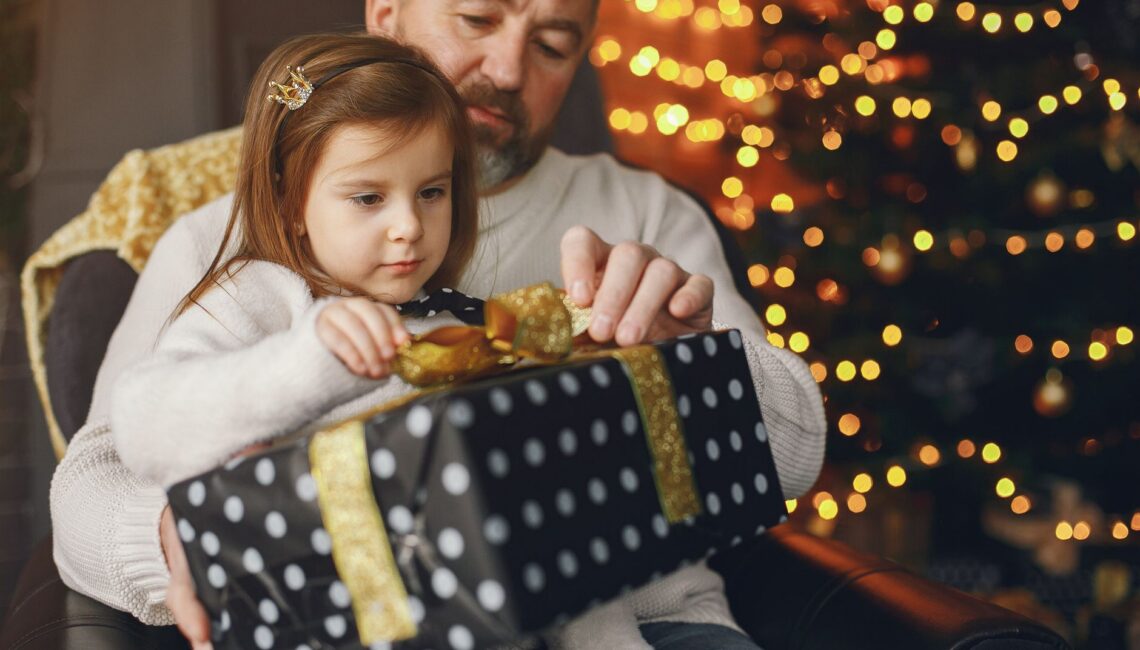
When she was little, lifting her to put the star on the tree was the whole event. Not part of the tradition. The tradition. I would crouch down, she would climb onto my shoulders like she was summiting Everest, and my wife would hover nearby doing that half-laugh, half-panic thing mothers do when fathers turn family memories into orthopedic risks. My daughter would grab my hair for balance, because apparently my scalp was a safety handle, and she would jam the star onto the top branch with all the delicacy of a linebacker clearing a path.
Then she would shout, ‘I did it!’
And she had. Not neatly. Not symmetrically. Not remotely up to code. But she had done it, and I had been the scaffolding.
That is a strange job, being the scaffolding. You do all this unseen work to hold them high enough to reach something, then one day they do not need the boost. They stand there with a phone in one hand, a sarcastic comment ready in the other, and they can reach plenty on their own. Maybe not the top of the tree, because genetics were only mildly generous, but life? Life, she is reaching.
College has changed her in ways I can see and ways I am probably too dense to notice. She says things like ‘my apartment next year’ and ‘I need to check my schedule’ and ‘I already handled it,’ which are all normal sentences that somehow land in my chest like a medicine ball. She has opinions about politics, professors, money, laundry detergent, coffee strength, and which family traditions are sacred versus which are apparently up for litigation.
The star, I learned, is sacred. My technique is not.
There is comedy in that, thank God. If there was not, I might fold completely. Humor is the little release valve that keeps a father from turning every change into a funeral. She makes fun of the star, I make fun of the fact that she came home with four bags of clothes and one phone charger, and somewhere underneath the sarcasm is the heavier thing neither of us wants to name directly.
This is different now.
Not bad. Not worse. Just different.
My own childhood Christmas memories have a different texture. My dad fought the lights like a man engaged in combat. Those old strands had one setting: betrayal. One bulb would die and take down the entire operation, and he would sit on the floor testing them one by one, muttering under his breath like he was interrogating suspects. I remember wanting the tree finished, wanting the magic, not realizing that the magic was partly him refusing to quit on a string of tiny glass idiots.
I get it now. The tradition was not calm. It was not cinematic. It was boxes from the basement, somebody stepping on an ornament hook, one parent pretending they were not annoyed, kids getting distracted after six minutes, and a tree that always looked better if you dimmed the lights and lowered your standards.
And somehow, that was the stuff that stuck.
At work, I closed Tray 2 again, because apparently I am a man of faith, and the copier finally came alive. It spit out three pages I no longer needed, then paused like it deserved a pension. I stood there thinking about how much of fatherhood is like that. You press buttons. You open the tray. You close the tray. You follow instructions that may or may not apply to the actual problem. Then, randomly, something works.
I have spent so much of my life trying to be efficient. Train harder. Work smarter. Compete. Build. Provide. Do not waste motion. Do not get outworked. Those instincts have served me. They have also made me ridiculous inside my own house. Nobody needs a father who approaches Christmas decorations like a playoff series. Nobody is giving out rings for ornament spacing.
Still, I care. I care because these rituals feel like handholds. The world moves fast. The kids move faster. One minute you are buckling them into car seats with Goldfish crackers crushed into every seam, and the next they are texting you from an airport gate because their flight is delayed and they are annoyed at the airline like a seasoned business traveler. You look at them and see the adult they are becoming, then some tiny ghost version of them runs across your memory wearing footie pajamas and holding a candy cane like a weapon.
That is the serious part hiding under the joke. The star was crooked, but the moment was not. She was there. She cared enough to comment. She did not disappear upstairs immediately. She stood in the living room with us, laughing, bossing, rolling her eyes, adjusting ornaments I had hung too low because apparently I have ‘no visual hierarchy.’ I do not know where she learned that phrase, but I suspect tuition is involved.
Eventually, she pulled over a chair and climbed up herself. Not onto my shoulders. Not into my arms. Just onto a chair, steady and capable, like a person who has learned how to navigate dorm bathrooms, group projects, bank apps, and whatever social ecosystem exists on her phone that I only partially understand. She took the star off, inspected the top branch, bent it slightly, then placed it back with a small twist.
Perfectly straight.
Of course it was.
I made a comment about beginner’s luck. She told me not to be insecure around superior talent. I told her she was welcome for the elite coaching environment. She said the program had produced mixed results.
That, right there, was the win. Not the tree. Not the star. Not the photo we forgot to take because we were too busy laughing at the ornament shaped like a taco from fourth grade. The win was standing there with my adult daughter, trading shots like teammates, feeling the distance and the closeness at the same time.
I went into my meeting late by two minutes with toner on my hand and Christmas in my head. Nobody noticed. Or maybe they did and chose mercy. The agenda was budgets, timelines, projections, all the grown-up stuff that pays for the roof over the crooked-star moments. I listened. I nodded. I contributed something that sounded responsible.
But part of me was still in the living room, watching her fix what I could not quite get right.
There is a humbling in that. A good one. The kind that stings your ego just enough to make room for gratitude. I used to lift her so she could reach the top. Now she climbs up and straightens the thing herself, then makes fun of me on the way down.
Honestly, that feels about right.