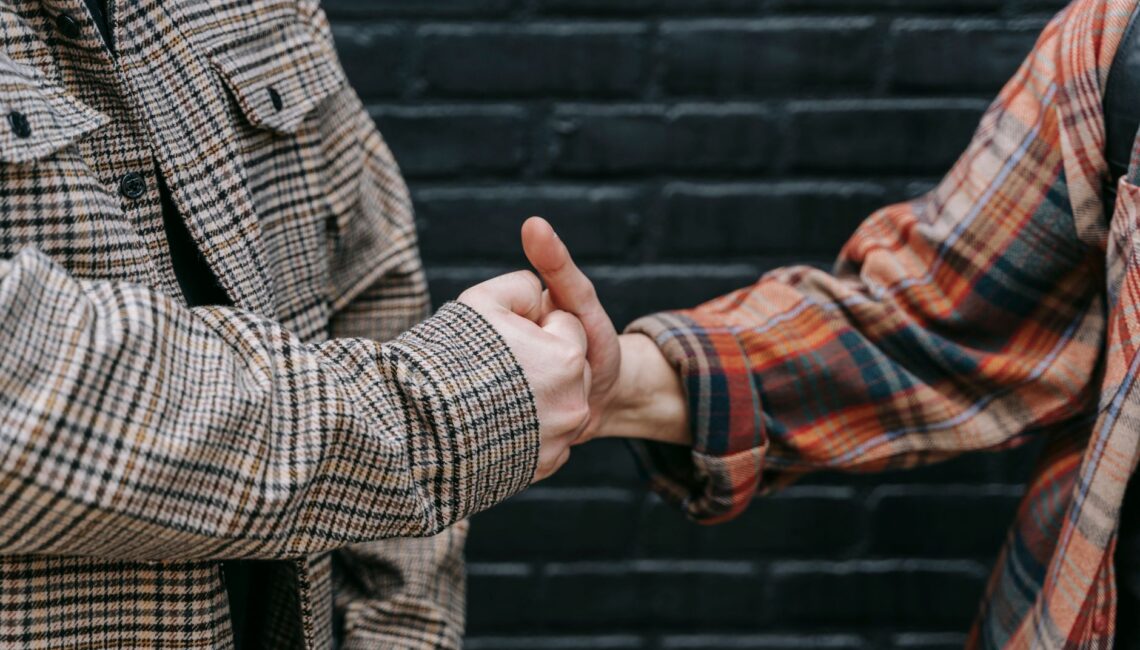
He wasn’t even supposed to be on the field that long. Seven minutes into the third quarter, my kid—knees grass-stained, hair plastered to his forehead—sprinted after a loose ball, tripped, and kept going like it was part of the plan. He missed the pass, slid to a stop, and for a second just stood there with his hands on his knees, chest heaving. The other kid, from the opposite team, lay on his back rubbing an elbow. Without looking, my kid walked over, offered his hand, and helped him up. No grand speech, no parents clapping louder than the ref, just a hand. The other kid accepted it, dusted himself off, and the game resumed like no big deal.
From the sideline that small thing felt enormous. Everyone around me kept yelling plays, coaching form, correcting angles. My throat was tight for reasons I couldn’t name and then, later, as we drove home, I realized it wasn’t the score or the missed pass or even the way his shoelaces were still untied. It was the quietness of that gesture—the way a kid who’d spent the last five minutes fighting for an inch of space stopped to pull somebody else up. I sat in the car in the driveway for longer than usual with the engine off, fingers against the steering wheel, replaying the hand extended like it was a highlight clip.
It’s funny how little things punch you harder than the big ones. When I was a kid, winning meant everything. I remember the taste of victory as sharp as metal—cheaper trophies, neighborhood bragging rights, the tiny electric thrill of proving you were better. I trained like the world depended on it, and when I lost I learned to turn my face away. Empathy was a spectator sport for someone else. Seeing my son offer his hand was a reminder that some of those instincts I honed so carefully were choices, not necessities. Maybe I taught him to hustle. Maybe he learned kindness from the slides and scrapes he saw me ignore. More likely it was both and neither: a messy, unpredictable mix of genetics, example, and chance.
Sitting there in the car—dashboard lights cool against my palms—I traced the memory back to the first soccer season I coached. I wanted to be the coach every parent thought they needed: strategic, motivating, decisive. I had a clipboard like armor, a playlist for warm-ups, and a tendency to mistake control for care. I didn’t realize I was coaching my ego as much as the kids. There was a certain satisfaction in diagramming plays that never held once the whistle blew, in being the loudest voice while missing the quieter ones on the field. Back then, I thought leadership was about dictating the rhythm. Watching my boy offer help felt like someone re-scored the whole game.
There’s a bruising contradiction here: the same father who drills footwork in the backyard—the one who times sprints and nags on follow-through—also wants to be the one who teaches generosity by not saying anything and just showing up. I want to sculpt a competitive kid—disciplined, resilient, hard to beat—but I also want him to know how to slow down for the person who stumbled beside him. Those aims aren’t mutually exclusive, but they don’t automatically overlap either. It takes deliberate surrender to let the lesson land without turning it into a coached moment. It’s the difference between teaching him to extend his arm because I told him to and witnessing him extend it because something in him noticed someone else needed help.
The driveway becomes a confessional of small admissions. I admit, under the hum of crickets and the glow of the streetlight, that I sometimes find myself attached to measurable things—the scoreboard, the watch, the progress chart—because they feed a tidy sense of achievement. Those are my numbers. They keep the athlete in me pacified. But the real metrics —the ones you can’t put on a whiteboard—are gestures, pauses, the way a child looks at another child when no one is watching. They land differently. They don’t make good press releases. They sit in your chest and make you quieter.
Part of me wants to give myself credit—a private pat for showing up, for sitting in the bleachers with frozen hands, for answering texts from other parents about practice times, for saying yes when someone needs a ride. Another part of me is suspicious of that credit, wondering how much of this is performance. Am I present because I choose presence, or because it makes me look like a good dad on neighborhood social media? Do these small acts belong to me as much as they belong to him? The humility of that question is a sting in the ribs. It’s not defeat so much as an honest tally.
There’s also the joy of witnessing something uncoachably real. Watching him help that kid up felt less like a data point and more like an opening—like seeing an unplanned play that somehow worked. It reminded me of the locker room after a game when we used to laugh about the stupidest things, the inside jokes that bonded teammates. Except this was quieter. No high-fives, no celebratory beer—just two kids remembering that they’re people first and opponents second. I felt a ridiculous surge of pride, immediate and open, like the moment I first hit a clean shot in a match I thought I’d lose. My chest swelled but didn’t insist on being loud about it. That felt new.
I also felt a small, sharp fear. If kindness shows up here, how will he handle the nastier edges of competition later? Will he still choose to help when the stakes feel bigger? Will he trade that hand for the rush of winning? It’s a ridiculous thing to worry about and completely natural. The athlete in me wants to prepare, to train him against the world. The father in me wants to trust that the impulse to help is part of who he is becoming, not just a phase. There’s no cheat code for this. You can’t signal-boost someone’s compassion the same way you teach them to keep their shoulders down when they’re running tired.
So I sat in the car, in that private pause, and let both feelings coexist—the quiet pride and the private jitter of uncertainty. I wasn’t either triumphant or failing. I was a guy doing the only thing I could do: watch, take notes in my head without turning them into instructions, and be available when he needed scaffolding. Not to manufacture character, but to hold space for whatever version of himself he chooses to build.
In the end, I put the key in the ignition, but didn’t start the car right away. I pictured that hand extended into the future—small, ordinary, the kind of thing that never makes the highlight reel but probably deserves to. I climbed out, closed the door softly, and thought about the ways parenting keeps you humble: you can prep and drill and plan, but the important stuff often arrives unscripted, in the margins, as a tiny act that makes you who you hope they’ll be. I locked the car, glanced back at the field, and walked toward the house carrying a quiet kind of victory that doesn’t need a trophy to be true.