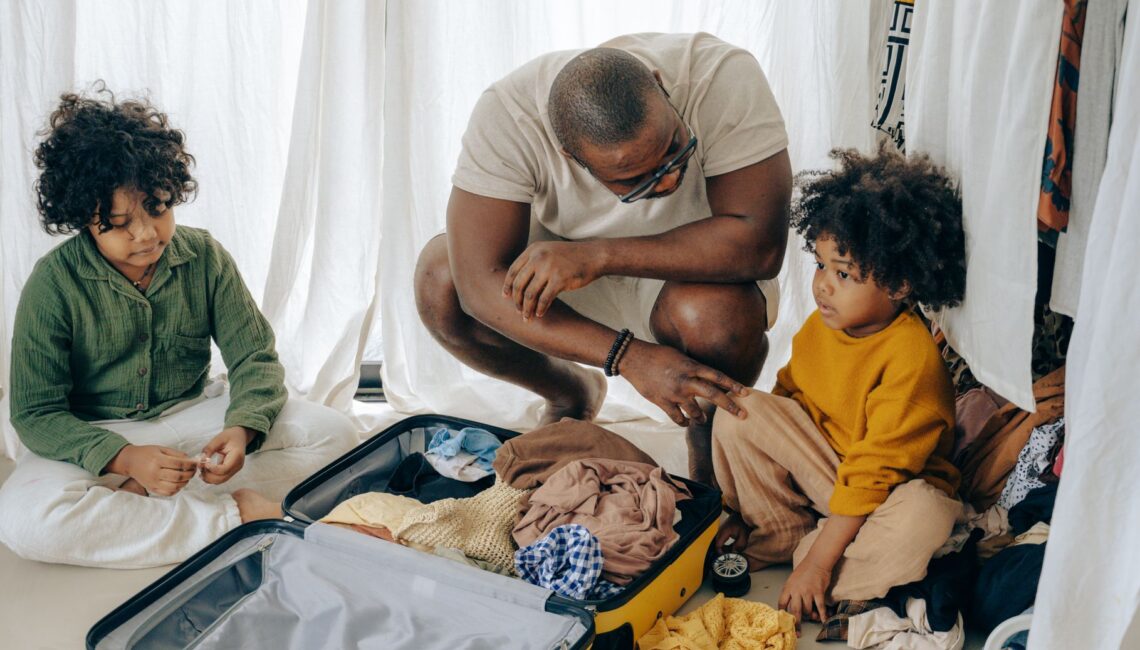
He sits on the kitchen floor with his duffel open like it’s a small, private locker room. Socks rolled into tight tubes, cleats shoved in a plastic grocery bag, a towel folded the way I used to fold my warm-ups in college—neat, efficient, almost ceremonial. He pauses to tuck a laminated schedule into the side pocket, then crumples a note into the top like it’s nothing: “Call Grandma Saturday. Pack charger.”
His shoulders are still the width of a kid, but the way he zips the bag—straight, decisive—catches me. I find myself giving him tips before I realize I’m offering them: “Don’t forget your mouthguard,” “Put the jersey on top.” He nods and keeps going, no dramatics, no arguing, just moving through the list like he’s rehearsed it. Somewhere between the cleats and the charger, I feel gratitude bloom and surprise me—sharp and stupid and bright.
Now I’m at my desk, doing the thing adults do when they want to feel like they’re on top of something: copying rows in a spreadsheet until the numbers line up. The office is quiet, a few people on calls, the hum of the AC punctuating the clicks. My cursor blinks. My hands perform the work while my mind keeps wandering back to the duffel on the kitchen floor. I can hear the faint echo of him asking if I’ll drive him to the tournament, the choreography of this tiny departure looping in the background of a humdrum Tuesday.
It’s ridiculous how a zipper can pull you out of a meeting. But it did. I think about how I used to pack: all performance, all ego. Threw things into a bag and called it readiness. The man I was measured preparedness in lists and the size of his duffel. The father I am now measures it differently—by the pauses and nods of the kid across from me, by the way he folds a towel because someone taught him once and it stuck like a spine.
Watching him pack felt like watching the replay of a game where you recognize the movement but can’t remember who coached the play. Did I teach him this? Did he just steal it from some teammate? Did his mother slip into his routine with a Post-it and a gentle insistence? None of those answers dull the little ache of pride. It’s not a loud, victorious horn; it’s the sound of small competence assembling itself across our kitchen floor.
At work, the spreadsheet is the only audible evidence that I’m present. I paste a cell and the memory of him folding a jersey edges in: two sleeves folded over, the collar tucked in. The kind of habit athletes inherit because someone told them once that small rituals make practices cleaner. I remember my father folding his own gym shorts with ridiculous precision, like he was packing for some personal impossible mission. He never talked about it, just did it. I thought it was silly then; now I get it. Rituals are scaffolding for the messy, human stuff beneath.
There’s a funny competitiveness to parenting that I didn’t expect. I catch myself wanting to say, “I taught him that,” like I pulled some technical move out of thin air. But the truth is messier: parenting is a shared training table. He learns from me, from her, from teammates, from YouTube tutorials filmed by people with clearer angles. I’m part coach, part practice partner, part laundry guy. Do these roles subtract from my dignity? Maybe. Do they also make me softer, more present? Definitely.
When he zipped his bag, his hand lingered on the pull-tab for a beat. A small indecision—did he have everything?—and then the motion was firm. He threw the duffel over his shoulder like he owned a small kingdom. He asked, casually, if I could drop him off. I said yes without thinking. That yes felt like a free throw I owed him and didn’t know I’d be glad to take the shot for.
Gratitude surprised me because I wasn’t expecting to feel anything other than a logistical shrug. We’ve been through tournaments and trips before, and yet this one felt different. Maybe it’s the age—he’s eleven, a tilt toward independence where he’s still very much tethered to us but beginning to test his wings against the zipper. Or maybe it’s the accumulation of tiny, quiet wins: the time he fixed a flat tire on his bike and didn’t cry, the night he read two chapters out loud because he promised himself to a book, the way he answers his phone when Grandma calls. Those moments pile up until they’re a small mountain of proof that you’re not flailing as badly as you thought.
Sitting at my desk, my thumb scrolls aimlessly through our family group chat and I land on a photo of the duffel on the floor. A pinned note says, “Bring sunscreen.” My chest tightens in a way that’s close to love and a little like awe. Gratitude feels inconvenient in the middle of my day; it’s soft and distracting and not at all the efficient emotion I could file away and reference later. It insists on being messy and present, and I let it be.
There’s still ego in this game. I feel proud in ways that satisfy an old competitive hunger—he’s competent because of me. Then I feel small when I realize how many hands touched his growth. Pride and humility sit next to each other like teammates on the bench: neither wants to hog the conversation, both know they’re needed for the win.
Sometimes I fear that noticing is the same as taking credit. I try to watch him without rearranging him, to applaud internally without coaching for the sake of my own coronary pride. Is that possible? Maybe not perfectly. But on the drive to the tournament later, as he slumps in the passenger seat scrolling through a playlist for the road, I plan my silence like a play—a defensive move that lets him occupy his own space. I’ll offer the playbook when he asks, not before.
The mundane chore at my desk keeps moving. Numbers align, emails are sent, notifications ping like small birds. But the kitchen floor is with me in a way it wasn’t this morning. Gratitude has a shape now: a duffel bag, a folded towel, a Post-it reminding someone to call Grandma. Little things that could be overlooked become markers. They tell me we’re doing okay on this whole private project of raising a human who can zip his own bag and remember to pack a charger.
I don’t have a neat conclusion. I won’t end with a tidy life lesson pinned to the zipper. What I have is a picture I can carry into meetings and spreadsheets: a boy folding a towel, the quiet ritual of getting ready, the small brass click of a zipper. It’s a humble momentum, neither dramatic nor complete, just enough to make me blink and be grateful, right there in the middle of something boring and ordinary.