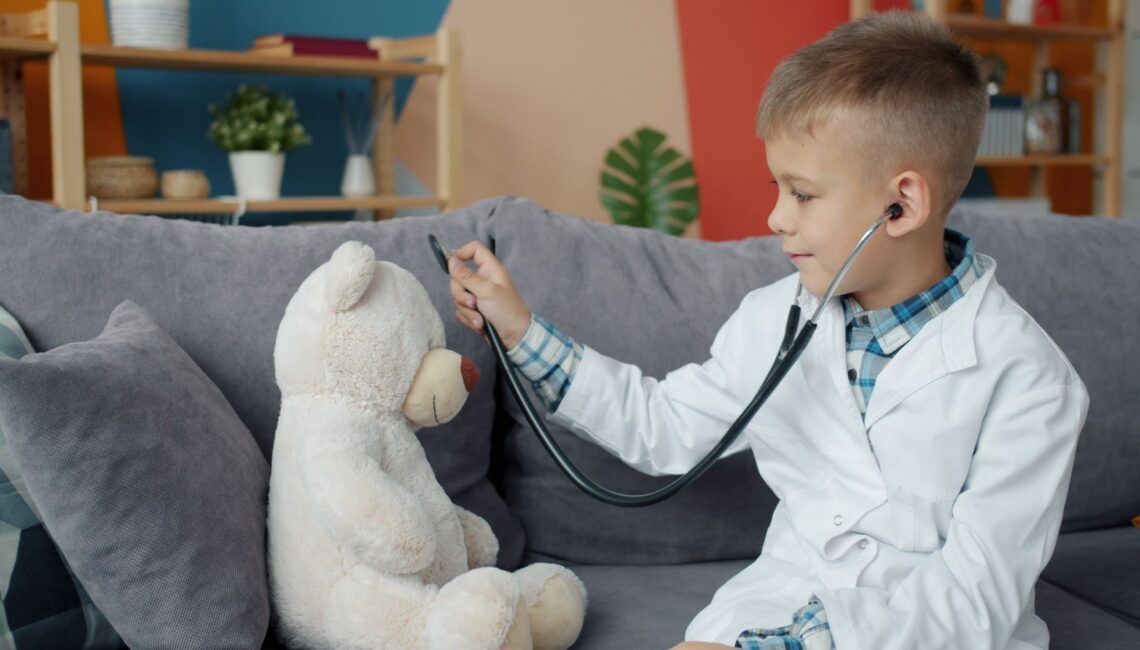
He was sitting two chairs away from me in the pediatrician waiting room, legs too short to reach the floor, light-up sneakers hovering over the carpet like he was suspended between planets.
There was a bead maze on the table, a cartoon giraffe on the wall explaining handwashing, and my son holding a plastic dinosaur in one hand while asking, with the casual violence only a four-year-old can manage, Dad, when I get big, do I still get to be your kid?
I looked up from the clipboard where I was halfway through answering questions that felt both ridiculous and impossible. Can he hop on one foot? Can he draw a person with three body parts? Does he use full sentences? Does he dress himself? Does he follow directions?
Yes. Sometimes. Too many. If the shirt is not inside out, backwards, or spiritually offensive to him. Define follow.
But there he was, looking at me like he had just asked whether we had snacks in the car. Meanwhile I felt something in my chest move an inch to the left.
Of course, buddy, I said. Always.
He nodded like that settled the matter, then made the dinosaur bite the arm of the chair. For him, the conversation was over. For me, it had just opened a trapdoor.
Waiting rooms are weird little purgatories for parents. You are physically still, but your mind is sprinting. Around you are the sounds of tiny coughs, sneakers squeaking, babies making that pre-cry noise that makes every adult in the room tense up like a storm is coming. There are forms on clipboards, posters about growth charts, old magazines nobody reads, and the quiet math of time passing right in front of you.
We were there for a routine checkup. Nothing dramatic. No fever, no limp, no mysterious rash I had been pretending not to Google. Just the normal stuff. Height, weight, vision, hearing, shots maybe, developmental milestones. The kind of appointment that should feel forgettable.
Except he asked that question.
Do I still get to be your kid?
And suddenly I was nostalgic for the boy sitting right in front of me. Not the baby version. Not some old photo with mashed banana in his eyebrows. Him. This exact size. This exact voice. The way he says spaghetti like there is a secret letter in it. The way he runs everywhere, even when the destination is six feet away. The way his whole body participates in a question.
It is a strange feeling, missing something while you are still holding it.
I watched him climb off the chair and walk over to the fish tank. He pressed his nose close to the glass, then told a fish it was going the wrong way. That is preschool in a sentence: absolute confidence, zero jurisdiction.
I used to think fatherhood would mostly require strength. Not emotional strength in the poetic sense. Actual capacity. Carry the car seat. Assemble the crib. Work the job. Pay the bill. Stay in shape. Keep the house running. Be steady. Be useful. Be the guy who knows what to do when something breaks.
And sure, some of that matters. There is a place for grit. There is a place for discipline. There is a place for being able to absorb impact and not flinch every time life throws a shoulder into your sternum.
But nobody tells you how much of fatherhood is standing in a waiting room with a half-chewed granola bar in your pocket, trying not to get emotional because your kid accidentally wandered into the philosophy department.
When I was his age, I do not remember asking questions like that. Maybe I did. Maybe my parents carry around moments I have no memory of, the way I carry his. That thought always gets me. The archive is not shared equally. Kids live the moment and drop it. Parents pick it up, label it, store it, revisit it years later when a song comes on or a backpack looks smaller than it should.
I remember being small in flashes. The smell of my dad’s car after practice. The roughness of my grandfather’s hand. Lying on carpet watching cartoons with my face too close to the TV. I remember wanting to be bigger, faster, older. I wanted the next thing. The next grade. The bigger bike. The real glove. The day adults would stop telling me I was too little.
Now I sit in vinyl chairs under fluorescent lights and want time to pull a hamstring.
That is the part I did not see coming. I am still ambitious. I still have that old athlete in me who wants progress measured and visible. Faster mile. Heavier lift. Better numbers. Cleaner execution. Even in parenting, if I am honest, there is a competitive piece of me that wants to do it well. Pack the good lunch. Show up to the school thing. Read the extra book. Be patient. Be fun. Be consistent. Win the day.
Then my kid asks if he will still belong to me when he is grown, and all my internal scorekeeping looks a little silly.
Because what am I training for, exactly? The finish line is him leaving. Not completely. Not if I do it right, I hope. But the job is, in some brutal and beautiful way, to make myself less necessary. Teach him to zip the jacket, pour the cereal, speak up, tell the truth, lose with grace, leave the room without looking back every time.
And here I am, proud every time he can do something without me and quietly devastated by the same evidence.
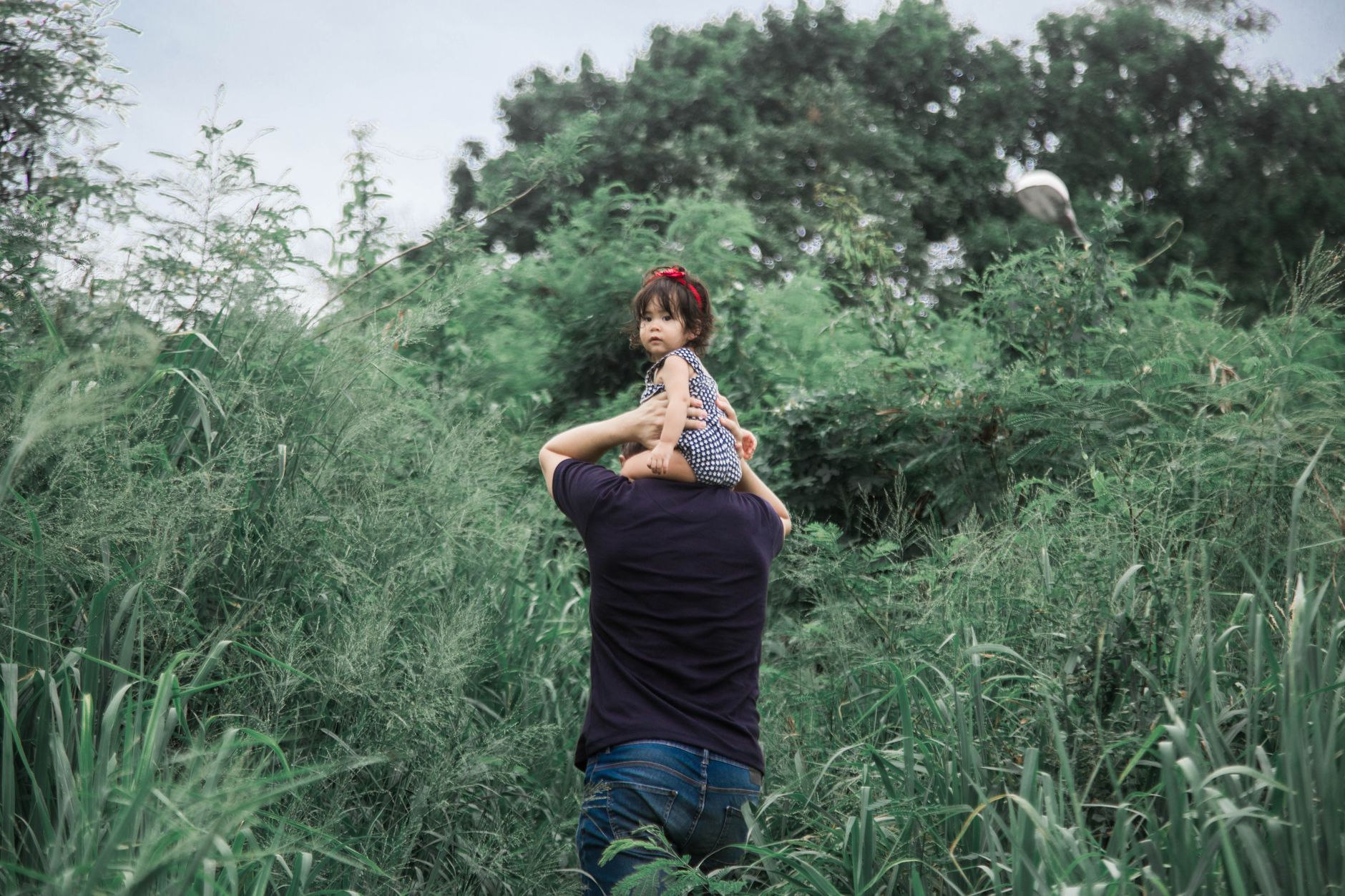
He came back from the fish tank and climbed into my lap like he still owned the place, which, for the record, he does. His knees dug into my thigh. His hair smelled faintly like syrup, even though breakfast had been hours earlier. He grabbed my face with both hands and turned my head toward him because subtlety has not yet entered the curriculum.
Dad, when I am big, can I drive your truck?
There it was. The sacred and the stupid, back-to-back. One minute we are discussing identity and permanence. The next minute he is trying to secure future vehicle rights.
I told him we would talk about it when his feet could touch the pedals.
He asked if that was tomorrow.
I said not quite.
He sighed like I had delayed his retirement.
This age is exhausting because everything is immediate. Hunger is immediate. Anger is immediate. Joy is immediate. A sock seam can ruin a morning. A blue cup can restore civilization. He wants to help crack eggs and then acts personally betrayed when there are shells in the bowl. He wants independence, but also wants me to watch him jump off the bottom step seventeen times because this one is different, Dad, watch.
And I do watch. Not every time. I miss some. I am answering emails, loading dishes, thinking about money, worrying about work, pretending I am not tired. I am present enough to feel noble some days and absent enough to feel guilty on others. That is the honest rhythm. No cinematic music. Just a man trying to be in two places at once and learning, slowly, that his kid only asked for one of them.
The nurse opened the door and called his name. He popped up before I did, proud that the world had announced him. He marched toward the scale with the swagger of a guy entering a weigh-in, then got shy the second anyone asked him a question directly.
I followed behind carrying the clipboard, his jacket, the dinosaur, and the invisible weight of that waiting room conversation.
He will get bigger. This is not a tragedy. It is the whole point. I know that. I want it. I want the missing teeth, the backpacks, the games, the late-night talks, the awkward school dances, the first time he beats me at something and tries not to smile too hard. I want to know the older versions of him.
But I already miss the version who asks if tomorrow is when he gets to drive my truck.
I miss him while he is still here, which feels unfair and also exactly right.
Maybe that is fatherhood at this stage: sitting in a waiting room with cartoon animals on the walls, realizing the kid beside you is both impossibly small and already on his way. You answer the big questions as best you can. You hold the dinosaur when he hands it to you. You sign the form. You stand when they call his name.
And when he reaches back for your hand without thinking, you take it like it is normal, while some quiet part of you knows it is not.