He was halfway out of the car when he stopped like he had forgotten how doors worked.
Backpack on one shoulder, one shoe somehow untied again, hair smashed on one side from sleeping hard, he turned around in the school drop-off line and looked back at me through the open door. There were cars behind us. There are always cars behind you in that line. Tiny commuters with Minecraft lunchboxes and parents trying not to look as impatient as they feel.
My first thought was not sweet.
My first thought was, What did I forget?
Did he have library today? Was there a permission slip still sitting on the counter under the bananas? Did I miss pajama day? Was he about to tell me his stomach hurt? Did someone say something on the playground yesterday and now the whole day was caving in before 8:00 a.m.?
He leaned back into the car, and my whole nervous system went from neutral to DEFCON Dad.
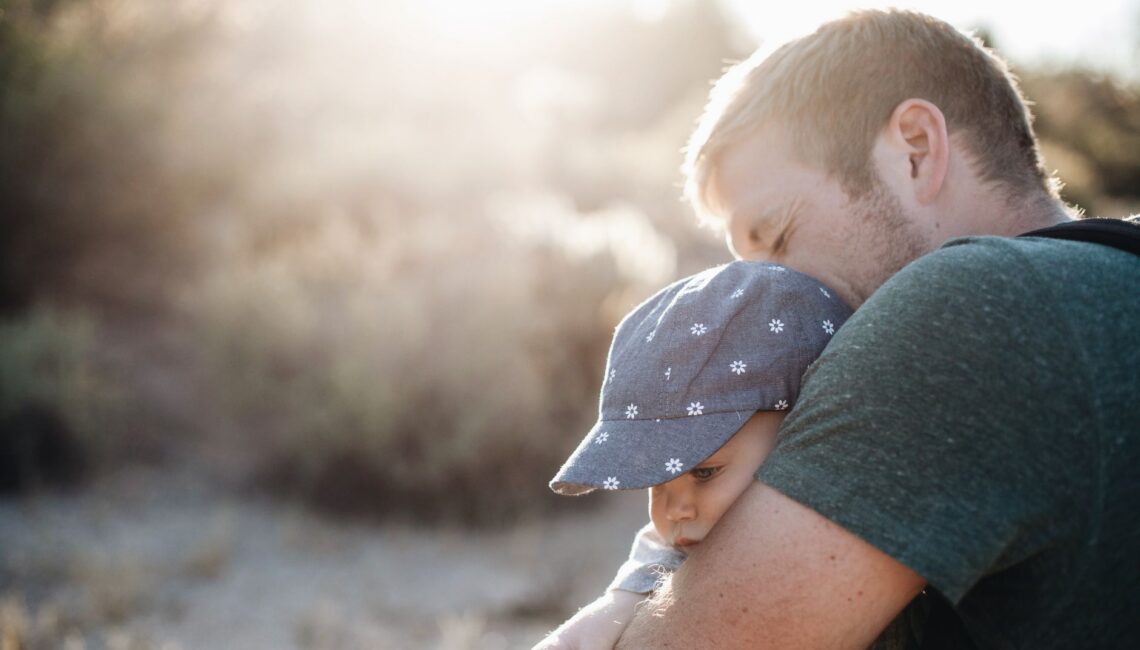
Then he wrapped both arms around my neck as far as the backpack would let him, squeezed hard, and said, I love you, Dad.
Just like that.
No setup. No warning. No negotiation for extra screen time hidden inside it. No request for a donut. No blood, no tears, no forgotten homework emergency. Just six or seven years old, standing in the open door of my truck while the line of cars stacked up behind us, deciding that this was the moment.
I said it back, obviously. Probably too fast. Probably with that weird dad voice that tries to be casual while the chest cavity is doing something stupid. He slammed the door, ran toward the building, almost tripped on the lace I had absolutely told him to tie, then disappeared into the herd of small humans being funneled through the front entrance by adults holding travel mugs and walkie-talkies.
I pulled forward because that is what the drop-off line demands. You can have a life-altering emotional moment, but you better merge.
For the first few minutes after I left the school, I drove with the radio off.
Not on purpose at first. I just never reached for it. No sports talk. No music. No podcast explaining how to optimize my morning or become a more effective version of myself, as if the current version had not just been completely dismantled by a first grader with loose shoelaces.
The road was wet from overnight rain. The wipers squeaked once every few seconds even though I did not really need them anymore. I kept replaying that second before the hug, the little pause, the way his face looked serious enough to scare me.
That is the part I could not shake.
I panicked before I received it.
My kid gave me love, and my body treated it like incoming danger.
That sounds dramatic, but any parent knows the math. Silence usually means damage. A phone call from school usually means fever or behavior or a playground collision. A kid reversing direction at drop-off usually means something got missed, lost, spilled, broken, or emotionally detonated. We are conditioned to scan for the problem. We become these exhausted little security systems with mortgages.
So when he turned back, I did not think, Maybe he wants one more hug. I thought, Brace yourself.
There is a sadness in that, and also a little bit of comedy, because fatherhood constantly makes you look ridiculous in front of yourself.
I have spent so much of my life training for impact. Sports wired me that way. Keep your feet moving. Protect the ball. Read the field. Anticipate contact. Do not get caught standing still. Even now, long after the competitive games that once organized my identity, I carry that posture into ordinary days. Calendar full. Shoulders tight. Coffee hot. Jaw set. Trying to win Tuesday before Tuesday realizes we are competing.
Then a kid in a dinosaur hoodie hugs you in the drop-off lane, and suddenly the entire game plan feels both noble and insane.
I thought about my own childhood while I drove. Not in some tragic, cinematic way. I was loved. I knew it. But the style was different. A lot of dads from that era loved like infrastructure. They showed up by going to work, fixing things, standing on sidelines, paying bills, scraping ice off windshields before anyone else woke up. The affection was there, but it often wore work boots instead of words.
I do not remember a lot of random I love yous tossed into the air on a Tuesday morning. Maybe they happened and I missed them. Maybe I was too busy being a kid, which is another way of saying completely self-absorbed and somehow still lovable. But I do remember wanting approval. I remember scanning my father’s face after a game. I remember the temperature change when he was proud. I remember how much a nod could weigh.
Now here I am, decades later, being offered the words plainly by a kid who still believes a bandaid can fix almost anything and that twenty dollars is basically infinite wealth.
And my reflex is panic.
That is a hell of a thing to notice about yourself on a damp road with no radio on.
At this age, they live in two worlds at once. Early elementary is this strange border country. He still wants me to watch him jump from the third stair like it is an Olympic event. He still climbs into my lap with elbows and knees everywhere, unaware that he is basically a bag of antlers. But he also has opinions now. He has friends whose names I hear constantly and friends whose names suddenly vanish from conversation. He cares what shoes he wears. He says things like everyone knows that with the confidence of a tiny professor who cannot find his socks.
He is becoming private in small ways.
He will shut his bedroom door to build something. He will answer fine when I ask about school, which is both completely normal and personally offensive. He will laugh at a joke I am not included in, and I will feel the faint sting of being moved from main character to recurring support role.
So when he runs back toward me instead of away, it lands differently than it did when he was three and affection was basically a full-contact sport. Back then, hugs came with sticky hands and a forehead to the nose. Love was loud, constant, and often delivered while he was trying to climb my body like a rope.
Now it feels chosen.
That is what scared me, I think. Not the hug itself. The awareness that these moments are not guaranteed by age anymore. They are becoming gifts instead of weather.
And gifts can humble you.
I had not been especially magical that morning. That is the part that got me too. I was not some patient saint kneeling in golden light, gently guiding my child through the morning routine. I was the guy saying, Buddy, shoes, three different times while mentally calculating traffic. I was annoyed about the missing water bottle. I was half-listening to a story about a dream involving a cheetah and the school principal because I was also thinking about an email I needed to send.
I was present, but not exactly glowing.
Then he hugged me anyway.
Parenting does that. It refuses to grade you only on the highlight reel. Sometimes the love shows up on a morning when you were average at best. Sometimes your kid reaches for you when you know damn well you were operating at 68 percent battery and no emotional Wi-Fi.
That is the relief that came after the panic. Not relief that nothing was wrong, though there was that too. Relief that maybe the relationship is sturdier than the mood of one rushed morning. Relief that beneath the reminders and the hustling and the friction of getting small people out the door, something warm is still alive and moving.
I do not want to over-romanticize it. By dinner, there would probably be a battle over vegetables, a meltdown about shower temperature, and an argument about whether brushing teeth for nine seconds counts. The same child who hugged me like a little poet might later accuse me of ruining his life because I would not let him watch one more episode.
That is the arrangement.
You get the sacred and the stupid in the same day.
Driving in silence, I thought about how much of fatherhood is learning not to flinch at tenderness. That sounds soft, but I do not think it is. I think it takes some strength to receive love without immediately turning it into a responsibility, a fear, a performance review, or a countdown clock.
I am good at effort. I understand effort. Effort has measurable edges. You lift the weight. You run the sprint. You make the lunch. You get to work. You pay the bill. You coach the team. You stay up late assembling the thing with instructions clearly written by someone who hates parents.
Receiving is harder.
Letting a moment be enough is harder.
Not grabbing it by the collar and demanding to know how many more like it I have left is harder.
The light turned red, and I sat there with both hands on the wheel, no sound in the truck except the engine and the soft drag of the wipers. I could still feel his arms around my neck. Quick, bony, sincere. The kind of hug that would not impress anyone watching, but somehow opened a trapdoor in the day.
The light changed. Someone behind me gave the tiniest courtesy honk, just enough to say, Sir, please return to Earth.
Fair.
I drove on, still not turning the radio back on. I had a meeting to get to. Emails waiting. A body that needs more sleep. A mind already lining up the next task. All the normal machinery of adulthood grinding forward.
But for once, I was not trying to solve the feeling.
My kid had turned back.
For no reason I could manage or earn or schedule, he had turned back.
And maybe that is one of the strange mercies of this whole fleeting, exhausting, beautiful thing. Every so often, in the middle of the rush, before you can brace for impact, love opens the door again and climbs back in.