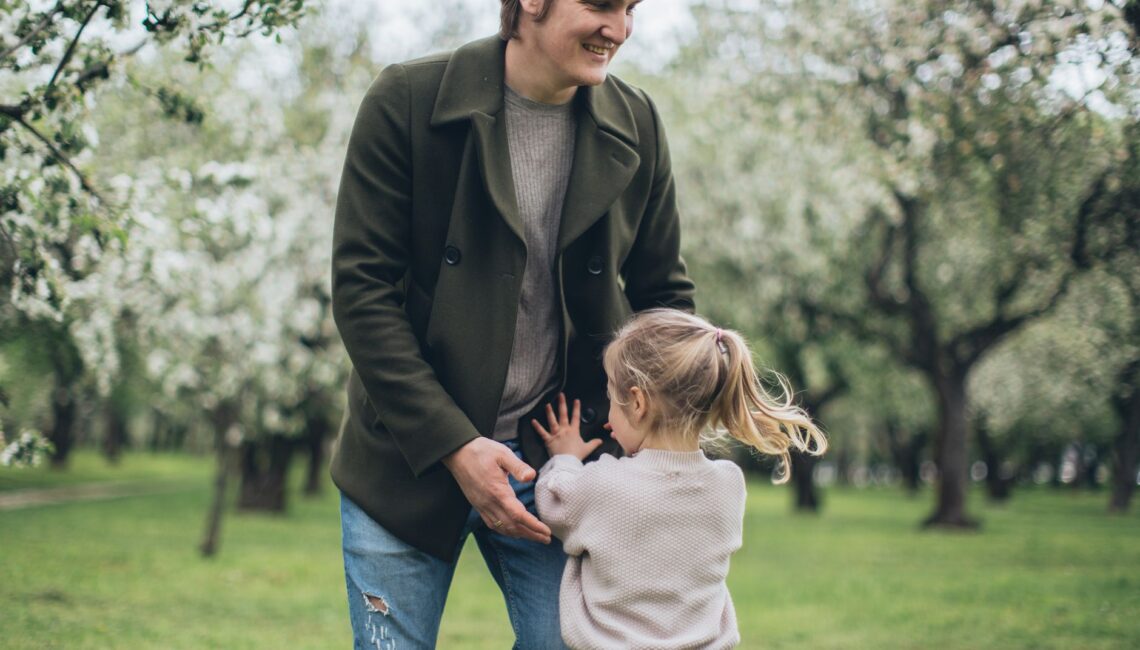
He didn’t look back. He never does—full head of hair, backpack swinging, a half-run toward the field like he was late for something bigger than middle school practice. But before he disappeared into the swarm of cleats and cone drills he turned, put his hands on his hips the exact way I do when I’m trying to get someone’s attention, and called over his shoulder in that thin, not-quite-mature voice: “Breathe like you mean it. Get your feet under you.”
I sat there with the car idling, the heat cranking on a gray morning, and felt a two-second stupid swell of pride sink into my chest. He’d been mimicking me all morning—the little sigh I breathe before tying my shoelaces, the way I drag an index finger along the dashboard when I’m thinking—only this time it wasn’t funny or imitative. It was cadence. Syntax. A habit. My cheap coaching lines, half-joked for years, leaving my mouth and coming back at me in his voice.
Driving home is where the replay starts. The drop-off line melts behind me into neighborhoods I know by memory: the corner with the cracked stop sign, the deli that still has the same cracked tile, the mailbox with the leaning post. Normally my brain sifts through emails or inventory of the day, but today every stoplight feels loud because the echo of his voice is still in the back of my skull. Gratitude arrives uninvited—a quiet, heavy thing that makes the steering wheel feel softer under my palms.
It’s a strange gratitude. Not gratitude for perfect moments or neat parenting milestones—those are easy to post about, easy to brag about at barbecues. This is gratitude for transmission: the boring, embarrassing, mundane ways your habits sink into someone else. The mantras you mutter to yourself in the garage. The clipped corner-of-the-mouth smirk that undercuts your lecture. The small, infuriating patterns you promised yourself you’d never bring forward. They’re there, folded into your kid like a hand-me-down jersey.
I remember my dad’s voice doing the same thing to me—the clipped admonitions and the offhand coaching. I wore them like armor and like a map. Some of them served me: show up, give 100 percent, don’t be sloppy. Others I had to pry off later—the quick judgment, the impatience when someone didn’t catch on fast enough. Seeing my son catch both the good and the rough edges of my voice is humbling in a way I didn’t expect. It feels like holding a replay of every ungraceful interaction I’ve had, with the added clarity that those moments matter. You leave prints even when you think you’re not leaving anything at all.
There’s a competitiveness in me that used to exist almost purely for self-validation. I trained like everything had a scoreboard on it, and sometimes I still catch myself measuring parenting in neat metrics: attendance, trophies, grades. But when he mimicked me that way—serious, earnest, not mocking—it felt like a little scoreboard flipped from “did I look good?” to “did I teach him how to steady himself when he needs it?” I don’t know how to be flattered without immediately checking the time and the inbox, so gratitude surprised me like a cold bucket of water. It made my throat tight.
We trade in little rituals. I get up earlier than feels reasonable to make lunches because he likes the sandwich pressed a certain way. He folds his sweatshirt the way I do when he disappears into the closet. He steals my hat and puts it on backward and laughs in the precise place I always laugh—a laugh that’s half grin, half an attempt at bravado. These are tiny, ordinary exchanges, but they are the fabric of his understanding of me. They are the syllables he’s using to build his own vocabulary for the world.
That doesn’t mean I have it all right. There are nights I replay the times my own impatience came out jagged, the late nights I chose work over a bedtime I could have made, the single-minded training cycle that cost me a missed recital. Those memories sit in the passenger seat with me sometimes, like a quiet critic I can’t fully silence. Gratitude doesn’t erase guilt; it sits beside it and makes the guilt less poisonous. It says, “This is messy, but something is passing through.” That was the sharpest, warmest thing about his mimicking: it felt like permission to be imperfect and still matter.
Part of me admires the athlete in him already. He lines up at practice, jaw set, like he’s been practicing for the pose all year. There’s a discipline there that makes my chest swell with a soft sort of pride. But another part of me is wary—if I shove only drills and discipline at him, if my voice is always a cadence of correction and expectation, what does that give him when he needs grace? Mimicry is a mirror. It reflects the good in big, clean streaks, and it throws the fissures right back into your face too.
On the drive I’m thinking in rounds the way coaches do—what are the reps he needs, where do I step in, where do I get out of the way? Sometimes the answer is to show him how to unwrap a problem and sometimes it’s to shut up and let him make the wrong pass. Parenting is a training program without a linear progression. You better respect tapering: knowing when to pull back so they can run light. Understanding that control is often less effective than presence. That idea hits me with the same clarity as a good sprint: you feel winded but you can see the finish.
Gratitude is stubborn. It lingers in the seams of the day—the way the sun finds a crack between two buildings, the small coin of a smile he throws over his shoulder two blocks back. I keep waiting for it to resolve into some tidy emotion—pride, relief, panic—but it refuses to settle. It is thankful and wary and a little stunned that all the repetitions of tiny choices could compound into a recognizable echo.
I pull into the driveway, kill the engine, and sit a beat. The house is quiet, the kind of quiet that both comforts and accuses. I can already see him later, mimicking me to his friends maybe, or inventing his own lines that will one day live in his child’s voice. The thought is both ridiculous and profound: we don’t just hand down tools and toys; we hand down rhythms, the way we carry ourselves into a room, the depth of our breaths when something matters.
I get out of the car and take the long view—no finish line, no perfect form to hit. Just a hundred small practices: showing up, apologizing when necessary, biting back a correction to offer a question instead. If I’m honest, what caught me off guard wasn’t that he was copying me. It was that the copying felt like trust. And that feels like a dangerous, glorious responsibility—the sort you don’t train for neatly, but that you are honored to try.