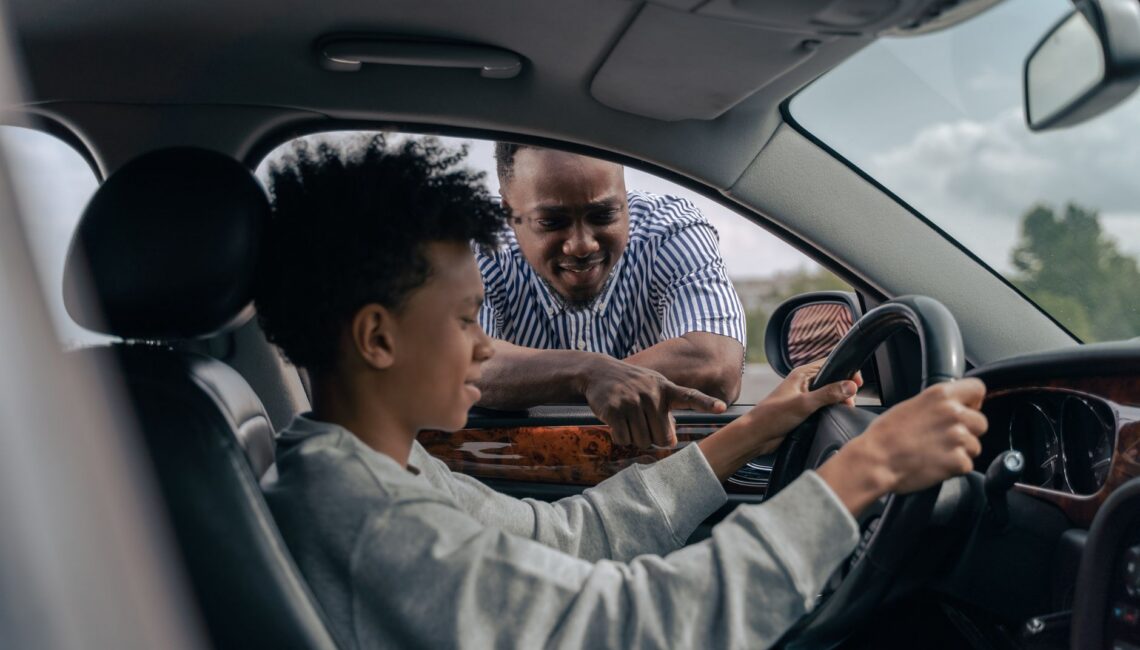
He killed the engine right between the cones, right where we had practiced a dozen times on a Tuesday evening while I beat myself up for not teaching him sooner. The car juddered, the instructor sighed like a referee blowing a whistle, and my son sat there with both hands clamping the wheel like he thought the steering column might vomit if he loosened his grip. He opened his mouth, closed it, and said, softly, that he was sorry.
I was on the sidewalk with a paper cup growing cold in my hands, watching him fail in real time, and I felt a heat come up in my chest that wasn’t pride. Irritation. Sharp and immediate, like a cramp in my thigh when I was supposed to be sprinting. I told myself I would be calm in the parking lot, that there would be patience and perspective. Instead, I sat there picturing all the times I had hustled him into the car for drills we both hated, the nights I gave up my evening workouts to sit in a folding chair and coach his throttle control. That accumulated effort became an accusation: you didn’t even try the last lane change properly, he should have checked the blind spot, he fumbled the clutch like he didn’t care. It read like negligence on his part and like wasted time on mine.
I drove away with the radio off.
The silence was deliberate. No music to soften the edges, no sports talk to justify the irritation. The city hummed under the tires and I felt like I was in an old training film where the soundtrack gets pulled out and you’re left with your heartbeat and the rhythm of the road. Sitting in that quiet, the irritation sounded ridiculous. It was a small thing—stalling a car in a controlled environment—but my reaction was big and ugly, the sort of reflex I promise myself I won’t have and then, embarrassingly, do.
Part of the anger was performative ego: I had imagined him succeeding because I had invested. It’s a weird math of fatherhood, where time+effort=entitlement to an outcome that never respects algebra. The other part was a purer impatience. He’s seventeen. He’s not a child anymore. He is not getting better on my timeline. He is getting better on his. That truth made me feel old and hungrier than I’d like to admit—the sort of hunger athletes get when they look at a scoreboard and remember they still want to win.
I remember a coach who used to bark at me for mistakes. He was efficient with shame; he knew how to convert embarrassment into performance. I used to hate him and then, later, miss him. Watching my son fumble, a small part of me wanted to be that coach—loud, corrective, clenched jaw. But then a bigger, softer part of me knew my job here is different. I am not training a body to lift more weight. I’m trying to keep a human heart capable of trying again without turning against itself. Even as I write that, the irritation returns because ideals are easier to nod to than to live.
I think about how failure used to bruise me. I replayed missed shots, dropped passes, botched interviews, each loss explained to myself as a single, solvable mistake. Practice, more reps, better prep. But parenting folds time differently. Reps are not always linear. A dozen parallel parking drills could mean nothing the day of the test if his nerves turn his feet to lead. Or maybe it means everything; maybe the dozen drills are the scaffolding that keeps him from panicking. I don’t know. I want the tangible coach’s answer and all I get is a messy, human one.
Halfway home I caught myself sizing him up like a game tape—where did he lose it? Was it within his control? Could I fix it with my voice? It felt like a betrayal, like I was evaluating him instead of being with him. That realization calmed me and then embarrassed me, which is a terrible loop to have while you’re supposed to be a role model. I practiced a few sentences in my head we could say at the kitchen table that night—no lecturing, no dramatics, just a little honesty. ‘You tried. We can keep at it. It’s okay to be nervous.’ But then I imagined him folding those words into a shrug and I felt another prickle of irritation, at him and at myself for caring so much what he thought of me in that moment.
Being an athlete taught me how to direct frustration outward—at the barbell, at the scoreboard, at the guy who bitched the loudest. Being a father complicates that. The person you’re irritated with is the person you would protect from that irritation. You want to correct without crushing. You want to motivate without turning your kid into your project. You want to be the steady hand who recognizes that getting run over by a moment can teach more than a hundred flawless rehearsals.
Driving with the radio off forced the thoughts forward like a stopwatch. Silence is harsher than music because it leaves you only your interior monologue, which is never flattering. I rehearsed apologies, concessions, the right tone. I also rehearsed the lines I know too well—the ones that will make him fold faster because they’re loaded with disappointment. Where do you stop being the coach and start being the person who believes in the attempt regardless of the result? The answer is hazy and smells faintly of failure itself.
When I pulled into the driveway, he was on the porch, hands shoved in his pockets, chewing the inside of his cheek. He looked smaller than his seventeen years, or maybe I was larger from my own need to be right. We said the easy things first. He said he was sorry again and I caught myself taking it like a verdict rather than the shaky, honest thing it was. I stopped myself from saying the stuff I thought would fix him—no technical breakdown, no ‘if you’d just.’ Instead I said, clumsy and human, that we could go back out this weekend, that everyone stalls sometimes, that the instructor’s look wasn’t a burial sentence. It wasn’t eloquent. It wasn’t practiced. It was the opposite of coach-speak. It felt like something we might be able to live with.
Driving away later, I still felt prickly. The irritation didn’t evaporate; it softened and folded into something quieter—concern that looked like fuss, protectiveness that looked like control. I don’t like that first shape of me. I’m not proud of snapping in the parking lot, of tallying up hours and expecting dividends. But I also recognize that the irritation tells me something: that I’m invested, that I care about standards, that I’m terrified of the easy surrender kids can choose if we never hold them to it. The problem is letting that fear become the loudest voice in the car.
So I keep the radio off sometimes on purpose now, because silence makes it harder to manufacture an argument against your kid. It also gives space for the quieter parts of fatherhood—the ones that let you watch a son fail and still believe he will come home and keep his hands on the wheel. No tidy finish. No medal. Just the linger of a mistake, the hum of the road, and the slow work of getting back in the driver’s seat together.