“Can we not put anything on?” he asked, already half-swallowed by the passenger seat, concert clothes wrinkled, tie loosened like he’d just survived a corporate merger instead of a sixth-grade band performance.
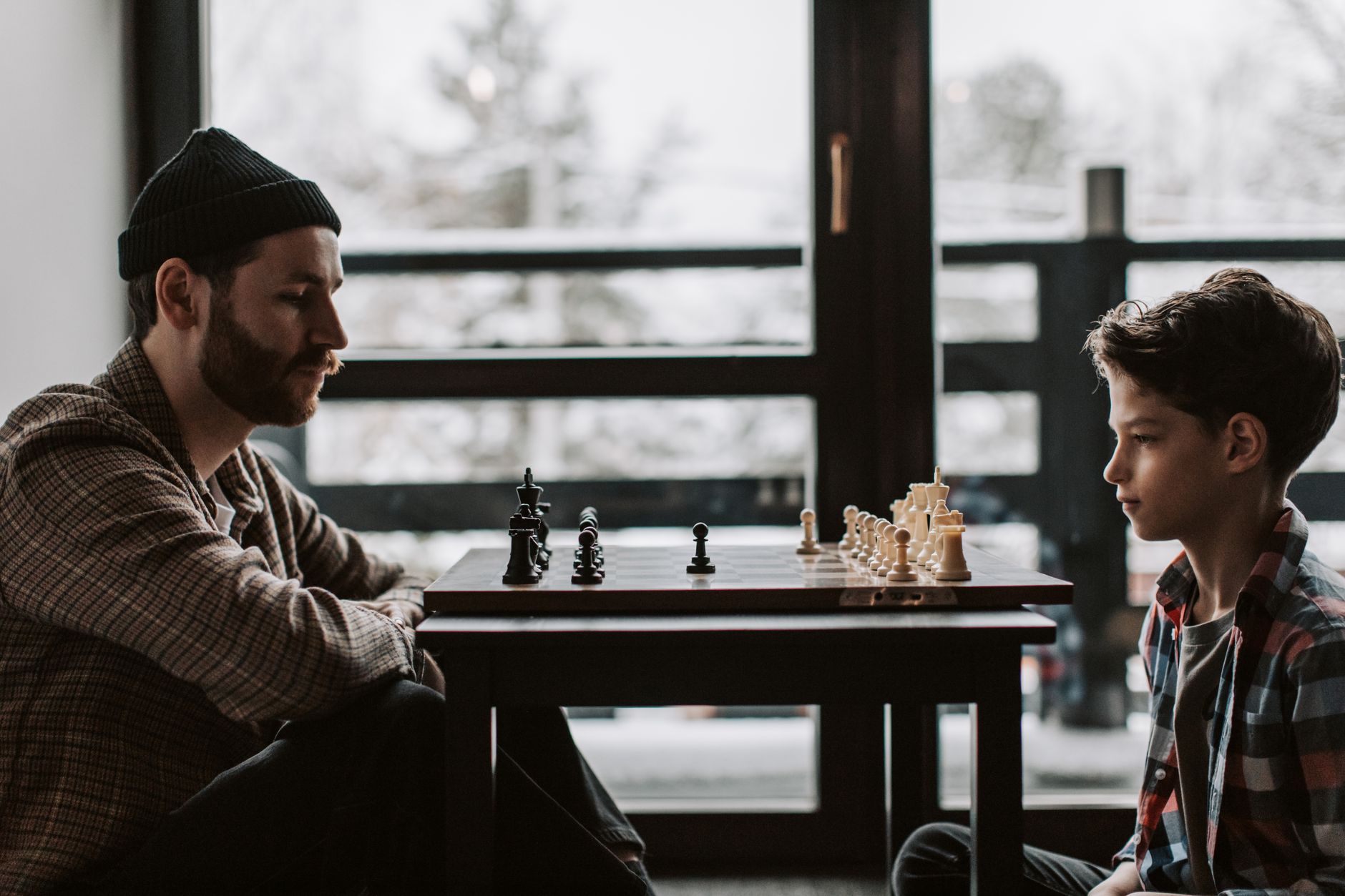
I had my thumb hovering over the screen, ready to cue up music or a podcast or something to fill the space between the middle school parking lot and our driveway. The gym doors were still spilling out families behind us. Kids carried instrument cases like oversized briefcases. Parents did that exhausted little wave people do when they have collectively endured folding chairs, fluorescent lights, and a trumpet section with courage far beyond its accuracy.
So I left the car quiet.
Just the hum of the engine. The soft slap of windshield wipers moving mist around more than clearing it. Him beside me, eleven years old, long legs folded at weird angles, sneakers too big, hair doing whatever hair does when it has been trapped under winter static and stage nerves.
For the first few minutes, he said nothing. I didn’t either, which for me qualifies as personal growth. My default setting after any event involving one of my kids is analysis. How’d you feel? Were you nervous? Did you see me? Did I embarrass you? Did you notice I didn’t yell your name like that one dad? I can turn a ten-minute car ride into a postgame press conference if I’m not careful.
But he asked for quiet, so I gave it to him.
Then, somewhere between the school and the gas station with the flickering sign, he said, “I messed up in the second song.”
I looked over for half a second. “I didn’t hear it.”
“You wouldn’t. You don’t know what it’s supposed to sound like.”
Fair.
He wasn’t being disrespectful. He was just stating a fact with that surgical tween accuracy that can remove your ego without anesthesia. I don’t know what a sixth-grade baritone part is supposed to sound like. I know effort when I see it. I know nerves. I know the look of a kid scanning a crowd without trying to look like he’s scanning a crowd. I know my son, sort of. Or at least the version of him I’m allowed to know this week.
“Were you mad?” I asked.
He shrugged. “For like a second. Then I just kept playing.”
And there it was. Not fireworks. Not some cinematic father-son revelation. Just a sentence from the passenger seat that landed harder than I expected.
Then I just kept playing.
Later that night, I was folding laundry on our bed, matching socks that did not belong to one another and pretending I wasn’t personally offended by the volume of inside-out shirts one household could produce. His black hoodie was in the pile, still warm from the dryer, the one he wears almost every day despite owning other clothing like a reasonable citizen. I picked it up and held it for a second longer than necessary.
That drive kept replaying in my head while I folded. Not because anything huge happened. Maybe because nothing huge happened. No argument. No lecture. No big performance from me as The Present Father. Just a quiet car, a kid talking when he was ready, and me somehow managing not to stomp all over it with my own need to be useful.
Gratitude hit me sideways.
Not the polite kind. Not the “we’re blessed” kind you say when things are going well and everyone is behaving. This was stranger. It showed up while I was smoothing sleeves and turning socks right-side out. It was gratitude with a little ache in it. Gratitude that my eleven-year-old still wanted to ride home with me. Gratitude that he asked for silence instead of disappearing immediately into headphones. Gratitude that he let me sit close to one honest sentence before the door closed again.
Tweens are a weird middle distance. They are not little anymore, but they are not big either. They smell like shampoo one minute and gym floor the next. They want you nearby but not hovering. They want snacks, privacy, money, rides, and occasionally your entire emotional availability at 9:47 p.m. with no warning and no context. They can still look small under a seatbelt, and then two seconds later say something so sharp and mature you wonder who authorized this person to live in your house.
I think the surprise was how much I had braced myself for loss.
When they’re babies, everyone warns you it goes fast. When they’re toddlers, you believe it because you’re physically aging in real time. But around this age, the loss gets quieter. They don’t outgrow the car seat in one obvious moment. They just stop needing help with the buckle. They don’t announce that bedtime stories are over. One night they’re too tired, then they’re reading their own thing, then you realize you haven’t done a character voice in months and nobody filed a report.
I keep thinking I’m prepared for the next stage because I’m disciplined. That’s the athlete in me, still hanging around like an old coach with a whistle. Prepare. Adjust. Compete. Stay ready. I built a lot of my life on the idea that if you work hard enough, you can influence the outcome. You can train the weakness. You can watch film. You can get better.
Fatherhood respects effort, but it does not worship it.
You can be all-in and still miss the moment. You can show up and still say the wrong thing. You can love them with your whole chest and still become annoying by asking one too many questions about their day. There is no scoreboard that tells you if you handled the car ride correctly. There is only the kid beside you, deciding in real time whether you are safe enough for the next sentence.
When I was his age, car rides after events felt different. I remember the vinyl smell, the dashboard glow, the strange power of sitting up front. I remember wanting my dad to ask and also desperately not wanting him to ask. I remember measuring myself by performance even before I had language for it. Did I play well? Did I look nervous? Did I make him proud? Did I give him something worth talking about?
That stuff gets into your bones early. Especially for boys. You learn to report the result before the feeling. You learn to say “fine” like it’s a complete emotional system. You learn that mistakes are either corrected, hidden, or turned into jokes before somebody else can get there first.
So when my son said he messed up and then kept playing, I felt proud in a way that had almost nothing to do with band. I was proud he noticed. Proud he cared. Proud he didn’t collapse into it. Proud he told me. And, if I’m being honest, proud of myself for not turning it into a damn seminar on resilience.
That’s the embarrassing part sometimes. The wins are so small they would sound ridiculous out loud.
Congratulations, man. You remained quiet in a vehicle.
Big night for personal development.
But maybe that is where a lot of fatherhood actually lives. Not in the speeches. Not in the photos where everyone is smiling with their arms around each other. It lives in the restraint. The swallowed comment. The hand not reaching to fix the tie unless asked. The ability to sit with your kid’s disappointment without trying to bench-press it into meaning.
I folded his hoodie and put it on top of the stack. It looked too big and too small at the same time, which is basically parenting at this stage. One minute I’m buying adult-sized shoes for a child who still leaves granola bar wrappers between couch cushions like a raccoon with a locker. One minute he is explaining a meme I do not understand with visible disappointment in my ignorance, and the next he is asking if I can check the hallway because he heard a noise.
I used to think being a good dad meant being the steady one. The provider. The protector. The guy with answers, tools, gas in the car, snacks in the console, a plan for traffic, a backup plan for the plan. And some days, yes, that matters. There is love in logistics. There is devotion in standing in a school gym after a long workday, clapping for songs you cannot identify, wearing the hard bleacher smile of a man whose lower back is negotiating with God.
But that night, folding laundry, I wondered if steadiness is less about having answers and more about not needing the moment to be about you.
Because I wanted to be thanked. Not dramatically. Just a little. I wanted some tiny acknowledgment of the schedule rearranging, the rushing home, the parking battle, the sitting through all of it. That’s ugly to admit, but it’s true. There’s still a part of me that wants credit for showing up, even though showing up is the job.
Then gratitude caught me off guard because I realized I had received something better than credit.
I got the ride.
I got the quiet.
I got the sentence.
I got to be there while he carried a small mistake home and decided it wasn’t heavy enough to ruin the night. I got to witness him becoming more himself, not in a dramatic leap, but in the ordinary dark of a Tuesday drive.
By the time I finished folding, the laundry basket was empty and the bed was covered in little organized piles that would be destroyed by morning. His hoodie sat there waiting to be claimed, and I knew he would probably grab it without noticing it had been folded. He would pull it over his head, leave for school, forget something important, remember something random, grow a fraction of an inch, and move one more step into a life that is his, not mine.
And I would keep doing what fathers do.
Driving. Folding. Clapping. Waiting. Trying not to talk over the good parts.
Sometimes the gift is not that they need you loudly. Sometimes it is that, for a few miles, they let you stay close while they keep playing.