The cone died with dignity, if we are being generous.
It was orange, slightly faded, and standing there in the DMV practice course like it had no idea a sixteen-year-old with sweaty palms and too much confidence was about to turn it into roadkill. I was watching from behind the glass, pretending to be calm, hands in my pockets, doing that dad thing where your face says, “Whatever happens, I love you,” but your internal monologue is yelling, “Cut it sooner. Sooner. SOONER.”
My teenager was taking the driving test. First attempt. Big day. Freedom day. Insurance-premium-increase day. And for the first five minutes, it looked decent. Smooth stop. Signal. Mirrors. Very official. Then came the parallel parking portion, which is where dreams go to drag their undercarriage across a curb.
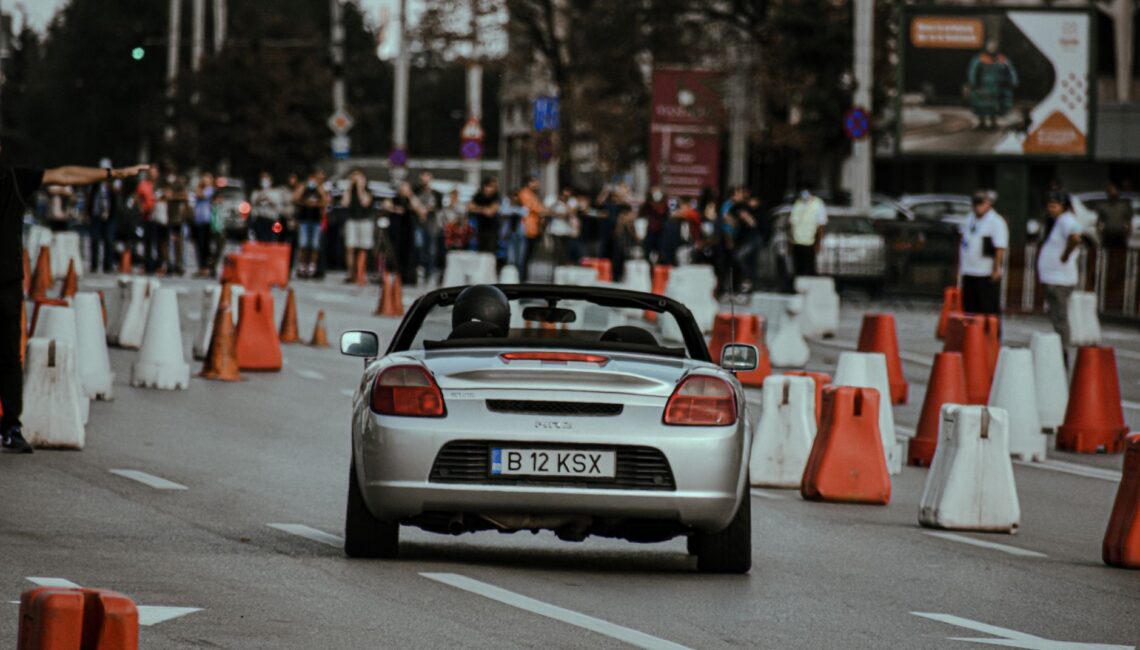
The car reversed. The wheel turned. The cone disappeared from view. Then it popped up again briefly, like a character in a disaster movie trying to escape. There was a soft bump, a tilt, and then the cone folded under the bumper with the quiet tragedy of a folding chair at a family barbecue.
I did not laugh.
Out loud.
That part feels important.
The instructor got out, retrieved the cone, and reset it like a little traffic funeral director. My kid sat there gripping the wheel, staring straight ahead, probably wishing the seat would open up and swallow them whole. I knew the feeling. Not the DMV cone specifically, but the public unraveling. The moment where your preparation, your ego, your self-image, and some cheap plastic object all meet in front of witnesses.
Later that night, I stood at the kitchen sink scrubbing dried pasta sauce off a pan like it owed me money. The dishwasher was already full because apparently teenagers are capable of operating a motor vehicle but not rinsing a bowl before the contents fossilize. Hot water ran over my hands. The same plate kept slipping in the same annoying way. Behind me, upstairs, a bedroom door was closed with just enough force to communicate devastation without triggering a parental investigation.
My kid had failed.
Not dramatically. Not life-alteringly. Not in a way that will matter in six months. But to a sixteen-year-old, failing a driving test feels like being rejected by adulthood at the front desk.
And I had watched it happen.
That’s a strange privilege of fatherhood nobody really warns you about. You spend years protecting them from sharp corners, loose grapes, unlatched gates, weird kids at playgrounds, emotional landmines, and YouTube rabbit holes. Then one day, you’re standing behind glass while a state employee calmly documents your child’s inability to coexist with a traffic cone.
Part of me wanted to storm the course like a coach arguing a bad call. Was the cone placed fairly? Was the examiner too stiff? Did the wind move it? Did the DMV consider that parallel parking is basically geometry with consequences?
Another part of me knew damn well the cone had been right there the whole time.
That is the internal split I keep running into as a dad. The competitor in me wants the win. I want my kid to pass, score, make the team, nail the interview, recover the fumble, walk out smiling. I want proof that all the hours mattered. The driving practice. The calm voice from the passenger seat. The repeated reminders that stop signs are not suggestions and the brake is not a rumor.
But the father in me, the part I’m still growing into, knows the loss has its own job to do.
Which is annoying.
I hate that.
I was an athlete long enough to know failure is useful, but that doesn’t mean I enjoy watching my child get punched by it. When it happened to me, I could metabolize it into fuel. Missed shot? Get in the gym. Bad race? Train harder. Coach chewed me out? Fine. Add it to the pile. I knew what to do with embarrassment. I weaponized it.
But watching your kid fail is different. There is no clean place to put it. You can’t run their sprints. You can’t take the test again for them. You can’t absorb the hot-faced silence in the car afterward when they’re staring out the window and you’re trying to decide if words will help or just make you sound like a motivational poster in cargo shorts.
So I said something brilliant like, “That sucks.”
Peak fatherhood. Put it on a mug.
To their credit, they gave me a look that said, “Thank you, Emotional Support Caveman,” then turned back toward the window.
At the sink, I kept replaying the drive home. The quiet. The slumped shoulders. The phone buzzing every twelve seconds because news travels fast when your friends are also waiting to see who gets licensed first. At one point, they texted someone, “I murdered a cone,” which honestly showed enough resilience that I considered calling the DMV and demanding partial credit.
Humor is how teenagers let you know they are not fully dead inside. It’s also how fathers avoid becoming too earnest and making everyone uncomfortable. There’s a delicate line between “I’m here for you” and “Let me now deliver a six-minute speech about adversity while you contemplate jumping from a moving vehicle.”
I thought about my own dad. Not in a grand, sepia-toned way. More like a quick flash of being a teenager myself, blowing something I thought mattered, and feeling that awful combination of shame and fury. I remember wanting comfort but not wanting anyone to notice I needed it. I remember adults saying things like, “You’ll laugh about this someday,” and thinking, “Cool, but today I’d like to disappear.”
That’s the tricky thing with teens. They are still kids, but they are wearing adult-sized armor now. Hoodies. Sarcasm. Earbuds. A face that says, “I require nothing from you,” while every molecule in the room says otherwise. You have to knock on the armor without acting like you can see the dents.
I rinsed a fork, found peanut butter on a plate that had allegedly held tacos, and wondered how many times my kid is going to fail while I stand nearby pretending not to overreact. Tests. Jobs. Friendships. Love. Big swings I won’t get to call from the sideline. There will be cones I never see coming. Some they’ll laugh about. Some will actually hurt.
That’s the serious thing underneath the ridiculous thing.
The cone was funny. Their face was not.
And I felt that old athletic impatience rise in me again. The desire to fix the mechanics. We could go back out tomorrow. Set up trash cans. Practice the angle. Repetition. Reps solve everything, right? That’s the gospel I grew up on. If you want the result, earn it. If you don’t like the feeling, work until the feeling changes.
There’s truth in that. There’s also a trap.
Because sometimes my drive, dressed up as support, is really just my discomfort looking for something to do. I don’t like helplessness. I’d rather make a plan than sit beside disappointment. I’d rather coach the technique than admit that my kid is going to have private battles where my job is not to lead the drill. It’s to stay close enough that they know the failure didn’t scare me off.
That sounds noble until you’re on your third pan and someone has left a spoon cemented into a bowl of cereal like an archaeological discovery.
Parenting teenagers is hilarious because they can discuss world politics, drive a car, roast your shoes with surgical precision, and still leave wet towels in places that defy physics. They crave independence but need you to buy deodorant. They want space but also your car keys. They don’t want a lecture, but they do want you to somehow say the exact right sentence at the exact right time with the exact right tone, preferably while not breathing too loudly.
Good luck, champ.
After the dishes, I walked upstairs and tapped on the doorframe. Not a big entrance. No speech music. Just a knock.
“You alive?” I asked.
From inside: “Unfortunately.”
That felt promising.
I opened the door a few inches. They were on the bed, hoodie up, phone in hand, eyes a little red but not enough to mention unless I had a death wish.
“For what it’s worth,” I said, “that cone had a family.”
There was a pause. Then the smallest laugh. Barely there. More exhale than sound.
I’ll take it.
I told them we could practice again whenever they wanted. Not tonight. Not as a punishment. Not because I needed to erase the failure before bedtime. Just whenever. They nodded, still looking at the phone.
Then, as I was leaving, they said, “The instructor was kind of a jerk.”
“Maybe,” I said.
“And I definitely hit the cone.”
“Also maybe.”
That got a real laugh.
Downstairs, the sink was empty, the counters wiped, the kitchen doing its best impression of order. I knew it wouldn’t last. Nothing does. Not clean kitchens. Not bruised teenage pride. Not the version of fatherhood where you think success means your kid never has to feel small.
Maybe part of raising them is standing close while they do.
Not rescuing. Not retreating. Not turning every stumble into a workshop. Just being there, sponge in hand, trying not to laugh at the wrong moment, trying not to miss the weight underneath the joke.
Tomorrow, the cone will be back in place. So will we, probably. A little humbled. A little better. Still ridiculous. Still trying.